ultimate-guide
Sustainable Baby Clothing Brands: A 2026 Guide
Table of Contents
- Why Choose Sustainable Baby Clothing
- Understanding Fabric Certifications and Standards
- Organic Cotton Baby Clothes Benefits
- Natural Fibers: Cotton vs. Bamboo vs. Hemp
- How to Identify Truly Sustainable Brands
- How to Care for Sustainable Baby Clothes
- Cost-Per-Wear Analysis and Budget-Friendly Options
- Frequently Asked Questions
Last Updated: October 1, 2026
Why Choose Sustainable Baby Clothing
Choosing sustainable baby clothing brands represents a meaningful decision about what touches your child's skin and how that choice affects the world they'll inherit. Unlike conventional fast fashion, sustainable baby clothing prioritizes your child's comfort and health while reducing environmental impact and supporting ethical manufacturing practices.
The difference starts with fabric. Sustainable options eliminate synthetic pesticides, heavy metals, and harmful chemical dyes that conventional cotton production relies on. For babies with sensitive skin or those prone to rashes, this matters immediately. Parents often discover that switching to sustainable fabrics reduces irritation and improves sleep quality.
Beyond health, there's durability. Sustainable baby clothing brands guide parents toward pieces built to last through multiple children, hand-me-downs, and years of washing. This longevity transforms the economics: a sweater worn by three children costs less per wear than cheaper alternatives worn once or twice before falling apart.
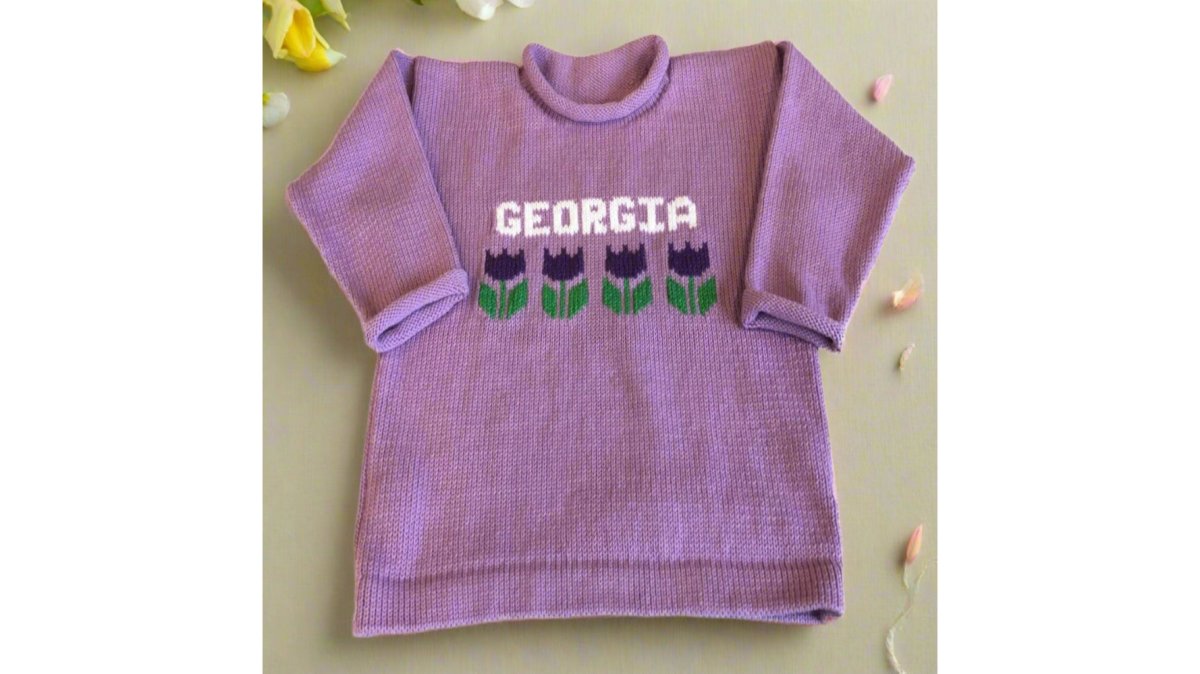
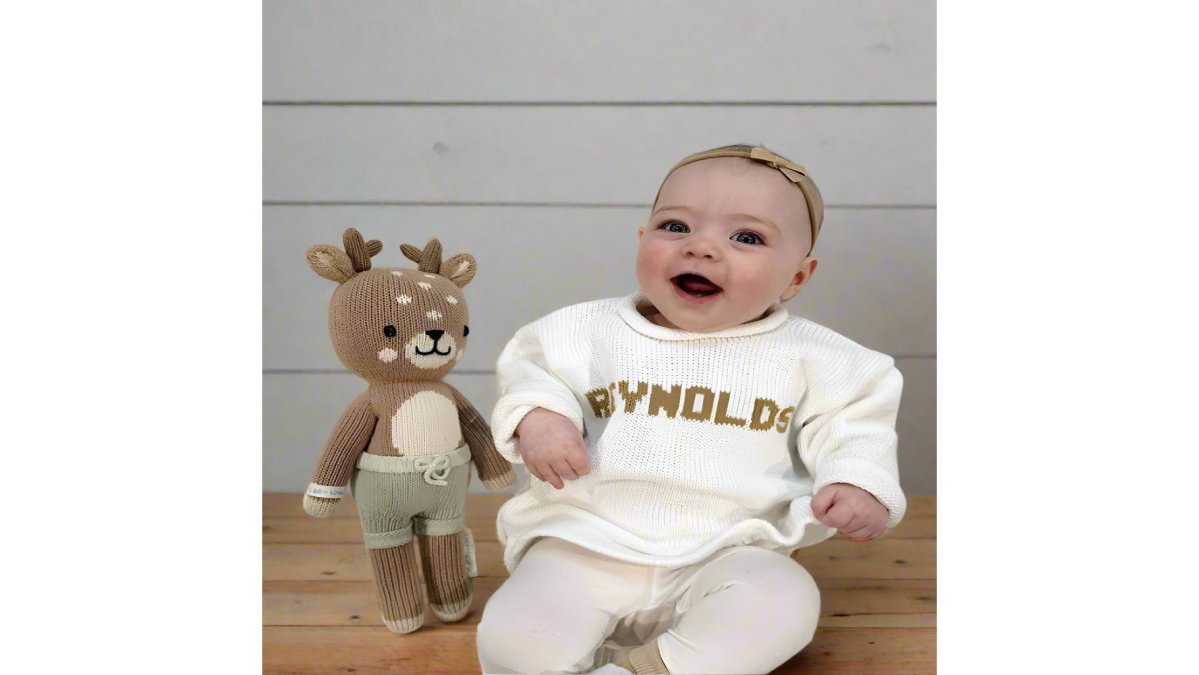
At Custom Knits for Baby, we understand that sustainable choices don't mean sacrificing quality or warmth. Our handcrafted sweaters use only the softest cotton yarn, customized with your child's name knitted directly into the fabric. This approach creates lasting keepsakes while eliminating the waste of mass-produced clothing that outgrows its purpose before it outlives its durability.
Understanding Fabric Certifications and Standards
Fabric certifications exist because parents deserve proof, not promises. When a brand claims sustainability, certifications provide independent verification that manufacturing actually meets stated standards.
GOTS-Certified Organic Cotton
GOTS (Global Organic Textile Standard) certification means the cotton was grown without synthetic pesticides or fertilizers, and the entire production chain, from farming through dyeing and finishing, meets strict environmental and social standards. GOTS certification requirements verify that no toxic substances remain in the final fabric.
For baby clothing, GOTS certification matters because it guarantees the fabric won't irritate sensitive newborn skin. The certification also requires fair labor practices and safe working conditions, meaning the people who made your baby's clothing were treated fairly.
Look for the GOTS label on tags. If a brand claims organic cotton but lacks GOTS certification, the claim is unverified, the cotton might be organic, but the dyes, finishes, and processing could still contain harmful chemicals.
OEKO-TEX Standard 100
OEKO-TEX Standard 100 certification tests the finished fabric for over 300 harmful substances, including heavy metals, formaldehyde, and pesticide residues. OEKO-TEX Standard 100 testing criteria ensure that what touches your baby's skin is genuinely safe.
This certification differs from GOTS. OEKO-TEX focuses on the safety of the finished product, while GOTS tracks the entire supply chain. Many sustainable brands carry both certifications for comprehensive assurance.
When comparing sustainable baby clothing brands guide recommendations, brands with OEKO-TEX certification have proven their products are free of toxic residues, a critical safeguard for newborns whose skin absorbs more readily than older children's skin.
Organic Cotton Baby Clothes Benefits
Organic cotton baby clothes deliver tangible benefits that go beyond marketing language. The fabric itself behaves differently than conventional cotton because it hasn't been treated with synthetic chemicals that alter its natural properties.
Organic cotton breathes better. Without chemical finishes that seal the fabric, organic cotton allows air circulation, which helps regulate baby body temperature and reduces overheating, a known risk factor in infant sleep. Babies wearing organic cotton clothing tend to sleep more soundly because they stay comfortable without the clammy feeling that chemical-treated fabrics create.
The fabric softens with washing instead of breaking down. Conventional cotton loses strength and becomes thin after repeated washing because the chemical treatments that make it feel soft initially are washed away. Organic cotton maintains its integrity wash after wash, which means clothing lasts through multiple children and years of daily use.
Hypoallergenic properties reduce skin reactions. Babies with eczema, sensitive skin, or general irritation often show improvement when switched to organic cotton. Parents report fewer rashes, less scratching, and better sleep within days of making the change.

The durability factor transforms the economics. A quality organic cotton sweater worn by one child, then stored and worn by a second child, then passed to a third, costs significantly less per wear than cheaper alternatives that fall apart after one season. This is the circular fashion model in practice, one piece serving multiple children over years.
Natural Fibers: Cotton vs. Bamboo vs. Hemp
Understanding the differences between natural fibers helps you choose what works best for your baby's needs and your family's values.
Organic cotton remains the most common choice for baby clothing. It's breathable, soft, and proven hypoallergenic. Cotton is easy to care for and holds color well through repeated washing. The main limitation is water consumption, conventional cotton farming uses significant water resources, though organic methods reduce this impact by eliminating synthetic pesticide runoff that contaminates water supplies.
Bamboo viscose offers exceptional softness and breathability. Bamboo grows rapidly without pesticides, making it a renewable resource.
How to Identify Truly Sustainable Brands
Not every brand claiming sustainability actually delivers it. Learning to evaluate claims separates genuine sustainable baby clothing brands guide resources from marketing-focused companies.
Ethical Manufacturing and Fair Trade Practices
Transparent supply chains indicate genuine commitment. Brands that clearly explain where their clothing is made, who makes it, and what working conditions are like deserve trust. Look for specific information: factory names, countries, wage transparency, and worker safety standards.
Traceability and Supply Chain Transparency
You should be able to trace your baby's clothing backward: from the finished sweater to the factory, to the textile mill, to the farm where the fiber was grown. Brands that provide this level of transparency have nothing to hide.
How to Care for Sustainable Baby Clothes
Proper care extends the life of sustainable baby clothing, maximizing the value and reducing waste. This is where circular fashion becomes practical.
Chemical-Free Laundry Practices
Sustainable fabrics deserve sustainable washing. Conventional laundry detergents contain synthetic chemicals that can damage organic fibers and reduce their lifespan. Chemical-free alternatives protect your investment while keeping chemicals away from your baby's skin.
Extending Garment Lifespan and Circular Fashion
Storage matters. Clean clothing thoroughly before storing. Fold rather than hang to prevent stretching. Store in breathable cotton bags rather than plastic, which traps moisture and encourages mold growth.
Cost-Per-Wear Analysis and Budget-Friendly Options
The initial price of sustainable baby clothing can feel high compared to mass-produced alternatives. Cost-per-wear analysis reveals why this perception misses the actual economics.
Frequently Asked Questions
What makes baby clothing truly sustainable?
Sustainable baby clothing combines three elements: organic or renewable fibers grown without synthetic pesticides, ethical manufacturing with fair wages and safe conditions, and durable construction designed to last through multiple children or resale. Look for GOTS-certified organic cotton or OEKO-TEX Standard 100 labels, transparent supply chains, and brands that disclose their production practices. True sustainability also means the garment biodegrades naturally at end-of-life and doesn't shed microplastics in the wash.
Why should I choose organic cotton baby clothes for my newborn?
Organic cotton baby clothes benefits include hypoallergenic properties that reduce skin irritation and rashes, especially for newborns with sensitive skin. Organic cotton is grown without synthetic pesticides or chemical fertilizers, so it contains no toxic residues. The fabric is softer and more breathable than conventional cotton, keeps infants comfortable in varying temperatures, and maintains its quality through repeated washing without fading or deteriorating. For parents concerned about chemical exposure during the critical early months, organic cotton provides peace of mind.
Are sustainable baby clothes worth the investment?
Yes, when evaluated on cost-per-wear. A durable, well-made sustainable sweater worn by one child, then passed to a sibling or resold, costs significantly less per wearing than cheaper alternatives worn once or twice. Sustainable pieces withstand 50+ wash cycles without pilling, fading, or losing shape. Many parents also find that building a capsule wardrobe of quality basics reduces overall spending by eliminating impulse purchases. Additionally, resale value for handcrafted, durable pieces remains strong, recovering some of your initial investment.
What certifications should I look for when choosing sustainable baby brands?
Prioritize GOTS-certified (Global Organic Textile Standard) for organic fiber verification and ethical labor standards, and OEKO-TEX Standard 100 for chemical-free testing. These certifications verify that garments contain no harmful substances and are safe for infants. Fair trade certification confirms ethical manufacturing and worker compensation. Look also for brands that disclose their water usage, carbon footprint, and supply chain transparency. Avoid vague terms like 'eco-friendly' without third-party verification; genuine sustainability is always backed by recognized standards.
How do I care for sustainable baby clothes to make them last longer?
Wash in cold water with plant-based, chemical-free detergents to preserve fibers and avoid skin irritation. Skip fabric softeners and bleach, which break down natural fibers and leave toxic residues. Air-dry whenever possible; heat damages delicate fabrics. Mend small holes or loose seams promptly to prevent larger damage. Store in breathable cotton bags away from direct sunlight. When your child outgrows the garment, resell or pass it along rather than discarding; sustainable pieces are designed for multiple wearers and gain sentimental value over time.
Can I build a sustainable baby wardrobe on a budget?
Yes. Start with a capsule approach: invest in 5-7 quality basics in neutral tones that mix and match, rather than many single-use pieces. Buy from brands offering budget-friendly sustainable options, and look for end-of-season sales. Purchase secondhand sustainable pieces from resale platforms, which dramatically reduces cost while extending garment life. Prioritize items your baby will wear frequently (bodysuits, sleep wear) over decorative pieces. Share costs with other parents through clothing swaps. Focus on cost-per-wear rather than upfront price; a durable piece worn 100 times costs less per wearing than a cheap item worn 5 times.