 ultimate-guide
Custom Baby Sweater Return Policy: What Parents Need to Know
Table of Contents
- Why Custom Baby Sweater Return Policies Are Different
- The Customization Paradox: Why Personalized Items Have Special Rules
- Personalized Baby Gift Return Policy: What You Need to Know
- What to Do If a Custom Gift Is Defective
- Custom Knit Baby Sweater Sizing Guide
- Exchanges, Store Credit, and Refund Options
- Sustainable Return Practices for Custom Knits
- Conclusion: Making Confident Custom Knit Purchases
- Frequently Asked Questions
Last Updated: September 13, 2026
Why Custom Baby Sweater Return Policies Are Different
A custom baby sweater return policy works differently from a standard retail policy because the item was made for one child, not for a shelf, and that is exactly why the custom baby sweater return policy deserves a closer look. According to FTC guidance on refund and return policies, sellers may set their own return terms as long as those terms are disclosed clearly before purchase. That single rule explains almost everything that follows.

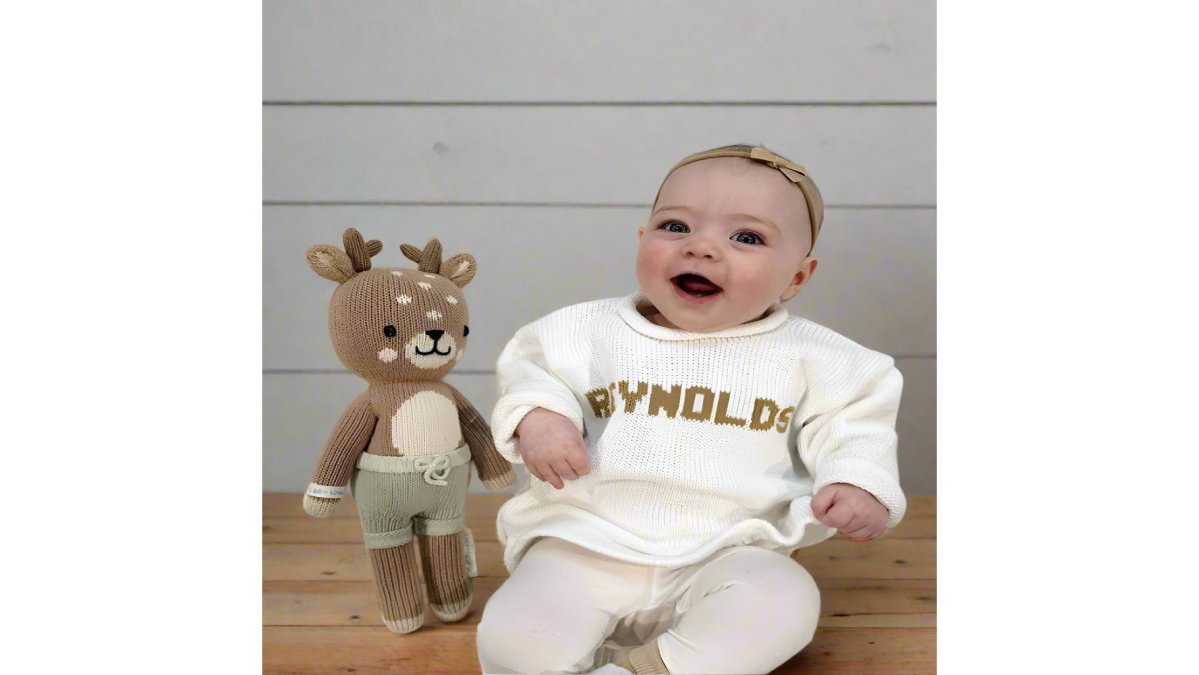
At Custom Knits for Baby, every sweater is hand-knitted with a specific name personalized into it. Once that name is on the garment, it cannot be resold to another family, which is why personalized items carry tighter return windows than mass-produced clothing.
The Customization Paradox: Why Personalized Items Have Special Rules
The customization paradox is the tension at the heart of every personalized purchase: the detail that makes a gift meaningful (the name, the monogram, the birth date) is the detail that makes it non-resellable. Makers typically separate two situations:
- Buyer's remorse (wrong size, changed mind, duplicate gift): usually limited or excluded, because the item is now unique to one child.
- Seller error or material defect (wrong spelling, faulty seam, flawed yarn): always covered, because the mistake was ours, not yours.
Personalized Baby Gift Return Policy: What You Need to Know
A personalized baby gift return policy typically allows returns only for defects or seller errors, with a short window (often 14 to 30 days from delivery) to report a problem, plus proof of purchase and the item unworn and unwashed (Solving Problems With a Business: Returns, Refunds, and Other Resolutions).
Return Eligibility and Timeframes
Most makers structure eligibility around three questions: was the item defective, was the error ours, and was the issue reported quickly? If the first two are yes, the window rarely matters; if not, it closes once the name goes on.
Expect to provide:
- Your order number or proof of purchase
- A photo of the item and the specific issue
- A description of what went wrong versus what you ordered
The defect-reporting window is typically shorter than a standard retail window because handmade items are inspected before shipping. Report within the stated window and keep the original packaging until you have inspected the sweater.
Non-Refundable Items and Exclusions
Non-refundable items generally include anything personalized, monogrammed, or made to a custom size, plus clearance and final-sale pieces, because they cannot be restocked. A sweater with "Emma" knitted into the collar has no second buyer.
What to Do If a Custom Gift Is Defective
If a custom gift is defective, contact the seller within the stated return window with your order number and a photo of the problem. Most makers will repair, replace, or refund, and a workmanship defect is almost always covered.

Step-by-Step Resolution for Errors
Most return policies stop at "contact us" and leave you guessing what happens next. Here is the process that works.
Stage 1, Document (Day 0). Photograph the issue in natural light: a wide shot of the sweater, a close-up of the defect, and the packing slip or tag. A complete photo set resolves claims faster.
Stage 2, Notify in writing (Day 1). Email customer support with the photos, order number, delivery date, and a one-line description of what is wrong versus what you ordered. Keep it factual: "The collar reads 'Emna' instead of 'Emma'" beats "This is wrong." Written notice also starts the return-window clock.
Stage 3, Get a return authorization (Day 1-3). Wait for the seller to issue a return authorization or prepaid label before shipping anything back. Unsolicited returns can be refused or lost, and without an authorization number you have no proof the seller agreed to accept the item.
Stage 4, Ship with tracking (Day 3-5). Use the provided label if one is issued. If you pay return shipping on a seller error, keep the receipt, a seller who stands behind their workmanship will reimburse it. Keep the tracking number until the refund posts.
Stage 5, Confirm the resolution in writing (Day 5-14). Get the outcome in writing: repair, replacement, store credit, or refund to the original form of payment. Ask for a confirmation email even if you agreed by phone.
The Escalation Ladder When the Seller Stalls
If a seller goes quiet or refuses a legitimate defect claim, escalate in this order:
- Follow up in writing once, referencing your original email and the return window, with a firm deadline such as five business days.
- Dispute the charge with your card issuer or payment platform. Under the Fair Credit Billing Act, you generally have 60 days from the statement date to dispute a charge for goods not delivered as described, the most effective lever a buyer has, and why credit cards beat cash for custom orders.
- File a complaint with your state attorney general's consumer protection division if the amount is significant and the seller is unresponsive. Most states accept complaints online.
- Report to the FTC at reportfraud.ftc.gov if you believe the seller's conduct is deceptive rather than merely slow. The FTC does not resolve individual disputes, but it tracks patterns.
Custom Knit Baby Sweater Sizing Guide
Sizing is the number one reason personalized baby gifts get returned, and it is the most preventable. Because custom knits often cannot be exchanged for a different size, getting measurements right before ordering matters more than with off-the-shelf clothing.
Sizing Accuracy Tools and Tips
Most hand-knit makers publish a size chart based on chest circumference and length rather than age, because babies of the same age vary widely. Use these steps:
- Measure your baby's chest at its widest point and compare it to the chart, not the age range.
- Add room for layering if the sweater will go over a onesie or undershirt.
- When between sizes, size up; a slightly loose knit lasts longer than a tight one.
- For newborn sizing, remember that many babies skip newborn sizes within weeks, so a 3-6 month size often fits longer.
- Check whether the seller lists finished garment measurements or body measurements. They are not the same thing.
Printable Measurement Worksheet
Copy this into a note on your phone or print it and fill it in before you order. It takes five minutes and prevents the most common return reason.
What you need: a soft measuring tape (a piece of string and a ruler works in a pinch), the baby's current weight and length from the last pediatric visit, and the seller's size chart open on your screen.
| Measurement | How to Take It | Your Number | Seller's Size Chart Match |
|---|---|---|---|
| Chest circumference | Around the widest part of the chest, under the arms, tape snug but not tight | ______ in | ______ |
| Body length | From the top of the shoulder to the hip bone | ______ in | ______ |
| Sleeve length | From the shoulder seam to the wrist bone | ______ in | ______ |
| Neck circumference | Around the base of the neck, one finger of slack | ______ in | ______ |
| Current weight | From the last pediatric visit | ______ lb | ______ |
| Current length | From the last pediatric visit | ______ in | ______ |
How to read the result: if your chest measurement falls between two sizes, choose the larger one. If the seller lists finished garment measurements, compare your baby's chest to the finished chest width minus about 2 inches of ease, a knit that matches the chest exactly will be too tight to layer. If the seller lists only body measurements, add 2 to 4 inches of ease for a comfortable fit.
Measuring a Baby Who Will Not Hold Still
Measuring a squirmy baby is its own skill. What works:
- Measure after a feeding, when the baby is calm or drowsy.
- Measure over a thin onesie, not a thick sleeper, and note what the baby was wearing so you can account for it.
- Take each measurement twice and average them.
- If you are buying as a gift and cannot measure the baby, ask the parent for the baby's current weight and length from the last checkup, then match those to the seller's chart. A slightly larger size is the safer choice, a sweater that fits at six months gets worn far more than one that fits for two weeks.
Exchanges, Store Credit, and Refund Options
Refunds on personalized items are usually reserved for defects, while exchanges and store credit are the more common resolutions for sizing issues.

When a defect is confirmed, most makers offer a replacement or full refund to the original form of payment. When the issue is sizing or a change of mind, store credit is typical, if anything is offered. Restocking fees are rare on defective items and more common on non-defective returns, though many personalized-goods sellers simply do not accept them.
Order cancellation is separate: many makers allow it before production begins and none after, because the yarn has been cut and the name programmed. If your plans change, contact the seller immediately.
| Situation | Typical Resolution | Who Covers Shipping |
|---|---|---|
| Wrong name or spelling error | Replacement or full refund | Seller |
| Material defect or faulty seam | Repair, replacement, or refund | Seller |
| Wrong size ordered | Store credit, if offered | Buyer |
| Changed mind | Usually not accepted | N/A |
| Order cancelled before production | Full refund | N/A |
Sustainable Return Practices for Custom Knits
Every return that does not happen is a small win for the planet. A sweater that is kept and worn never enters a returns warehouse, never gets shipped twice, and never ends up in a landfill because it could not be resold.
The most sustainable return practice is simple: measure carefully, confirm the spelling, and ask questions before you order. When a defect occurs, a repair is greener than a replacement.
There is also a keepsake angle here that goes beyond sentiment. A personalized knit that survives one child can be passed to a sibling, framed, or kept as a first-year memento. According to EPA guidance on textile waste, textiles make up a significant share of municipal solid waste, and extending the life of a garment is one of the most effective ways to reduce that impact. Buying something made to last, and keeping it, is the whole point.
Conclusion: Making Confident Custom Knit Purchases
The rules around custom baby sweater returns are not designed to be difficult. They exist because a personalized item belongs to one child, which is exactly what makes it worth buying. Understand the return window, confirm the size and spelling, and know the difference between a defect and a change of mind, and you will rarely need the policy at all.
At Custom Knits for Baby, every sweater is hand-knitted with the softest yarns and personalized with your child's name, and we stand behind the workmanship on every piece. If something arrives wrong, our team will make it right.
Order yours today and give your little one a sweater made just for them.
Frequently Asked Questions
Are personalized baby items eligible for returns?
Personalized baby items like custom name sweaters are generally not eligible for standard returns because they are made specifically for your child. However, if the item arrives defective, has a workmanship error, or the personalization is incorrect, you can request a resolution. Most custom knit brands, including ours, offer repairs, exchanges, or store credit for these situations. Always check the return window and contact customer support with your proof of purchase.
What is the standard return policy for custom-made clothing?
Custom-made clothing typically has a limited return policy due to its personalized nature. Standard returns for change of mind are usually not accepted. However, defects in material or workmanship, incorrect sizing from our error, or shipping damage are covered. You usually have 14 to 30 days from delivery to report an issue. A return authorization may be required, and refunds are issued to the original form of payment or as store credit.
How do I handle a damaged custom knit sweater?
If your custom knit sweater arrives damaged, first take photos of the damage and the packaging. Then contact customer support within the return window. Provide your order number and proof of purchase. We will guide you through the resolution process, which may include a repair, replacement, or refund. Do not return the item without a return authorization. Shipping costs for defective items are typically covered by the seller.
Can I exchange a custom baby sweater if the size is wrong?
Exchanges for sizing issues depend on the brand's policy. Because custom sweaters are made to order, size errors on the customer's part may not be eligible for free exchanges. However, if you used our sizing guide and received the wrong size due to our error, we will make it right. For customer sizing mistakes, we may offer a discount on a new order or store credit. Always measure your child carefully before ordering.
Custom knit purchases come with real questions, and the biggest one is always whether the item will arrive right and fit right. Custom Knits for Baby hand-knits each personalized sweater to order, stands behind the workmanship, and helps you confirm sizing before production begins. Explore the Custom Name Sweater for Infants and Children and the Classic Ribbed Name Pullover, then order yours today with confidence.