 ultimate-guide
Choosing Baby Clothes for Sensitive Skin: 2026 Guide
Table of Contents
- Why Sensitive Skin Needs Different Baby Clothes
- Best Fabrics for Baby Eczema and Sensitive Skin
- How to Wash Baby Clothes for Sensitive Skin
- Features to Look For: Tags, Seams, and Dyes
- Seasonal Layering Strategies for Sensitive Skin
- Sensory Processing Considerations in Clothing Choices
- Cost-Effective Maintenance for Long-Lasting Comfort
- Frequently Asked Questions
Last Updated: September 13, 2026
Why Sensitive Skin Needs Different Baby Clothes
Choosing baby clothes for sensitive skin comes down to one principle: reduce what touches the skin and control what stays on it. A baby's outermost skin layer, the stratum corneum, is roughly 30% thinner than an adult's, so irritants that barely register on your arm can trigger redness, itching, or a full flare on your newborn's (pubmed.ncbi.nlm.nih.gov). That's the whole reason fabric selection matters more for babies than for anyone else in the house.
This guide walks through the fabrics that calm reactive skin, the construction details that prevent friction, and the laundry habits that keep a good garment from becoming an irritant. Below, we'll show you exactly how to build a wardrobe that works for eczema-prone skin, and what most fabric guides get wrong about "gentle" claims.
Best Fabrics for Baby Eczema and Sensitive Skin
The best fabrics for baby eczema and sensitive skin are smooth, breathable natural fibers with minimal chemical processing: organic cotton, bamboo rayon, and fine merino in limited cases. Texture matters as much as fiber content. A rough weave chafes; a tight, smooth knit glides.

Organic Cotton: The Gold Standard
Organic cotton is the safest default for reactive skin because it is breathable, moisture-wicking, and grown without the pesticide residues that conventional cotton can carry. It's also the fiber most dermatologists recommend first when parents ask what to start with.
The catch is certification. "Organic" on a label means little without a GOTS-certified mark, which verifies the fiber content and restricts the dyes and finishes used in processing (global-standard.org). Azo-free dyes matter here: certain azo compounds are known textile irritants, and GOTS rules them out. If your baby has atopic dermatitis, look for the certification logo, not just the word.
Bamboo Yarn Benefits for Baby Eczema
Bamboo yarn benefits for baby eczema start with softness and thermal regulation. The fiber has a naturally smooth surface with fewer protruding ends than cotton or wool, which means less friction reduction is needed to keep it comfortable against inflamed skin. It also breathes well and pulls moisture away, so a warm baby doesn't sit in damp fabric.
Two caveats worth knowing. First, most "bamboo" on the market is bamboo rayon (viscose), a regenerated fiber, not raw bamboo fiber, and the processing method determines how gentle the finished yarn really is. Second, not every bamboo knit is equal; cheap versions pill and roughen after a few washes. A well-made bamboo or organic cotton knit holds its softness far longer.
| Fabric | Breathability | Friction | Best For | Watch Out For |
|---|---|---|---|---|
| Organic cotton | High | Low | Everyday wear, eczema-prone skin | Needs GOTS certification to be meaningful |
| Bamboo rayon | High | Very low | Warm sleepwear, thermal regulation | Quality varies; check processing method |
| Merino wool (fine) | Medium-high | Low | Cool-weather layering | Can itch if not superfine grade |
| Polyester blends | Low | Medium | Rarely ideal | Traps heat and moisture |
| Conventional cotton | Medium | Medium | Budget basics | Possible chemical residues |
How to Wash Baby Clothes for Sensitive Skin
Washing for sensitive skin means stripping out residue, not just removing stains. Detergent film, fabric softener, and fragrance are among the most common hidden irritants, and they build up on fabric over repeated washes. This is the step most fabric guides skip, and it's the one that quietly undoes an otherwise perfect organic cotton wardrobe.
Why detergent matters as much as fiber
Surfactants in conventional detergent are designed to bind to oils and lift them away. On a baby's skin, they can do the same thing to the lipid barrier that holds moisture in. That's why a fragrance-free, dye-free formula isn't a marketing preference, it removes two of the most frequently reported contact irritants from the wash cycle entirely. The same logic applies to fabric softener and dryer sheets: they work by depositing a waxy film on fibers, which is exactly the kind of residue that traps heat and irritants against reactive skin.
Match the wash protocol to the fabric
The right routine depends on what you're washing. A few fabric-specific notes:
- Organic cotton. Warm or cool water is fine; cotton tolerates heat better than the other fibers here. Skip chlorine bleach, which breaks down cellulose and leaves the surface rougher over time.
- Bamboo rayon. Cool water and a gentle cycle. Rayon loses strength when wet, so aggressive agitation is what causes the pilling that turns a soft knit scratchy after a few months.
- Fine merino. Cool water, wool-safe or pH-neutral detergent, and no agitation. Standard detergent is alkaline and will felt the fiber.
- Anything with a printed tagless label. Turn inside out so the print doesn't abrade against other garments.
A wash routine that works
- Use a fragrance-free, dye-free detergent formulated for babies or sensitive skin.
- Skip fabric softener and dryer sheets entirely; they coat fibers in a residue that defeats the point.
- Run an extra rinse cycle to flush out leftover detergent, this matters most with high-efficiency machines, which use less water to begin with.
- Wash new clothes before the first wear to remove manufacturing finishes.
- Keep the load separate from adult clothing, which may carry harsher detergents.
- Measure detergent; more is not cleaner, and excess is what stays behind in the fiber.
The re-wash test
When a new piece arrives, wash it once with your standard sensitive-skin routine and let your baby wear it for a short period before adding it to the rotation. If redness or fussiness appears, wash it a second time with an extra rinse. If the reaction repeats, the issue is the fiber, the dye, or the finish, not the detergent, and that garment isn't worth keeping in the drawer. This one habit prevents you from discovering a problem after you've already bought six of the same onesie.
Features to Look For: Tags, Seams, and Dyes
Construction details decide whether a garment is truly comfortable, and most shoppers overlook them. The right fiber in a scratchy build still irritates. A common mistake is buying a beautifully soft fabric in a garment with a stiff neck tag and a bulky shoulder seam. The seam wins, and the baby fusses.
Here's what to look for, and why each one matters.
Tagless design
Sewn-in tags sit directly against the back of the neck, where skin is thin and constantly flexing. Printed labels eliminate that contact point entirely. If a garment does have a sewn tag, check whether it's the soft woven type or the stiff coated type, the coated ones are the ones that leave red marks.
Seam construction
Raw seam allowances inside a garment create a raised ridge that rubs with every movement. French seams enclose the raw edge inside a folded, stitched channel so only a smooth surface touches skin. Flatlock seams lie flat against the fabric and are common in activewear and sleepwear; they're a good second choice. Overlocked (serged) seams are the standard in budget clothing and are the roughest of the three against skin.
Dyes and finishes
Azo-free dyes matter because certain azo compounds are known textile irritants, and GOTS-certified organic cotton rules them out as part of its processing standard. Beyond dye, watch for formaldehyde-based finishes used to make fabric wrinkle-resistant, these are more common in conventional cotton and are a recognized contact irritant. A garment labeled "easy care" or "wrinkle-free" is a signal to check the fiber and finish more carefully.
Elastics and closures
Waistbands and cuffs should be flat and covered, not exposed elastic. Snaps and zippers should sit on the outside of the garment or be backed by a fabric flap. Metal snaps can also contain nickel, a common contact allergen, plastic snaps or fabric-covered closures avoid that entirely.
Fit and room to move
A snug fit increases friction at joints and folds, which is where eczema flares most often appear. Loose, comfort-focused design reduces that friction and lets air circulate. The trade-off is that loose sleepwear needs to be sized carefully for safety; follow current safe-sleep guidance on fit rather than sizing up indefinitely.
A quick in-store checklist
- Run a finger along the inside neckline, can you feel a tag or a seam ridge?
- Turn the garment inside out and look at the seam finish.
- Check the label for a GOTS certification mark, not just the word "organic."
- Squeeze the waistband, does the elastic dig in, or is it covered and flat?
- Look for "wrinkle-free" or "easy care" claims and treat them as a caution flag.
Seasonal Layering Strategies for Sensitive Skin
Layering is where sensitive-skin wardrobes usually fall apart. The goal is to add warmth without trapping moisture or piling on friction.
The base layer should be your smoothest, most breathable fabric, organic cotton or bamboo rayon. Add a mid-layer knit for warmth, and reserve anything heavier for the outermost layer so it never touches skin directly. In summer, a single breathable layer is enough; overheating triggers itching as reliably as dryness does.
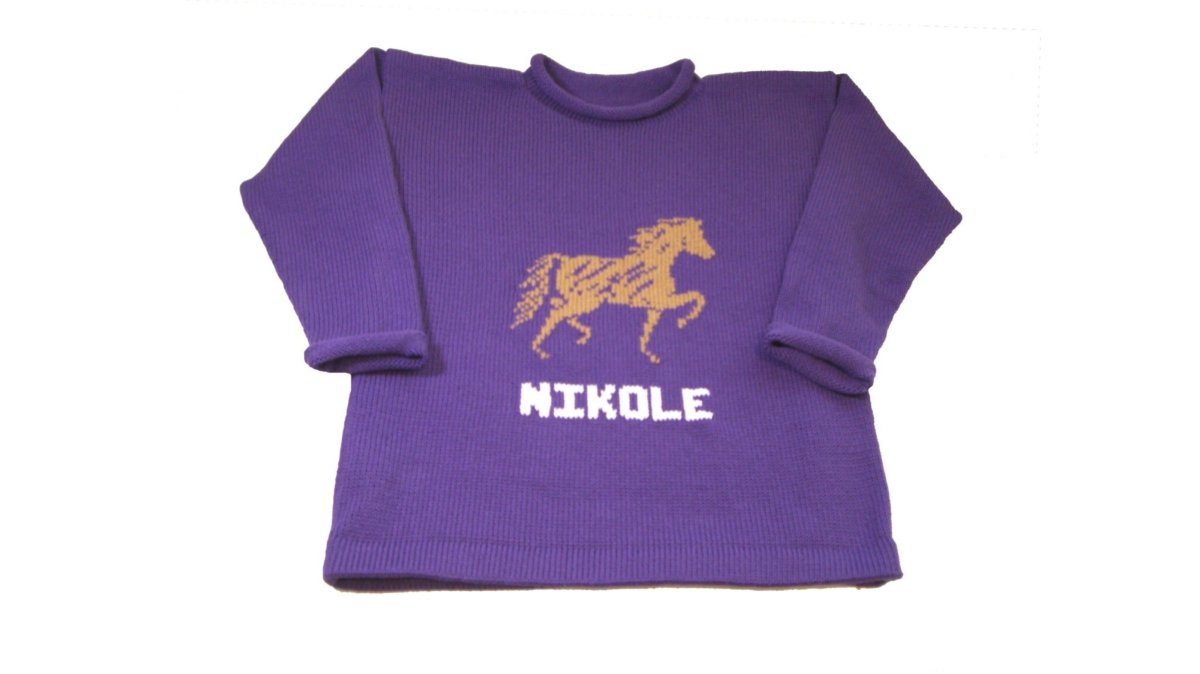
This is also where a well-made knit earns its keep. A personalized cotton sweater, hand-knitted with the softest yarns and customized with your child's name, works as a gentle mid-layer that breathes instead of trapping heat. The American Academy of Dermatology's guidance on eczema triggers notes that overheating and sweating are common flare triggers, which is exactly why breathable layering beats bundling.
Sensory Processing Considerations in Clothing Choices
For some babies, discomfort isn't only about the skin; it's about how the clothing feels to the nervous system. Children with sensory processing sensitivities react strongly to seams, tags, tight cuffs, and rough textures, and the reaction can look like ordinary fussiness.
A few adjustments help:
- Prioritize smooth, seamless construction over decorative details.
- Let the child help choose colors and styles when they're old enough.
- Wash new pieces until they soften before first wear.
- Keep a small rotation of "safe" garments that reliably work.
The overlap with eczema care is convenient: the same tagless, French-seamed, soft-fiber clothing that protects reactive skin also tends to suit sensory-sensitive kids.
Cost-Effective Maintenance for Long-Lasting Comfort
Sensitive-skin clothing costs more upfront, so protecting that investment matters. Cheap garments pill and roughen, and a roughened fabric becomes an irritant no matter how good the original fiber was.
Maintenance habits that extend life:
- Wash in cool water and air-dry when possible to preserve fiber softness.
- Turn knits inside out before washing to reduce surface friction.
- Store folded, not hung, to keep knits from stretching.
- Treat stains promptly so you avoid harsh stain removers later.
A hand-knitted piece, cared for this way, keeps its softness through multiple children. That's the quiet argument for buying fewer, better garments: a personalized sweater or Personalized Hearts Name Hat that holds up becomes a hand-me-down, not a throwaway. For families who want a keepsake that actually gets worn, pieces like the Little Trooper personalized baby knit are built to be used, not just displayed.

Frequently Asked Questions
What fabric is best for babies with sensitive skin?
Organic cotton and bamboo rayon are top choices. Organic cotton is grown without synthetic pesticides, reducing chemical residues that can irritate delicate skin. Bamboo rayon is naturally hypoallergenic and moisture-wicking, which helps prevent friction and overheating. Both fabrics are breathable and soft, making them ideal for babies with eczema or atopic dermatitis. Always look for GOTS-certified organic cotton to ensure no harmful dyes or finishes are used.
Are bamboo clothes good for babies with eczema?
Yes, bamboo rayon is often recommended for eczema-prone skin. Its fibers are smooth and round, reducing friction against the skin barrier. Bamboo is also highly breathable and moisture-wicking, which helps keep skin dry and cool, minimizing irritation. Many parents find that bamboo clothing causes fewer flare-ups than synthetic fabrics. However, ensure the bamboo is processed without harsh chemicals and check for azo-free dyes to avoid potential irritants.
How do I wash baby clothes for sensitive skin?
Use a fragrance-free, dye-free laundry detergent formulated for sensitive skin. Wash new clothes before first wear to remove chemical residues. Avoid fabric softeners and dryer sheets, which can leave irritating residues. Choose a gentle cycle with an extra rinse to remove all detergent. If possible, line dry in the sun, as sunlight can help kill bacteria and naturally brighten fabrics. Always separate baby clothes from heavily soiled items to prevent cross-contamination.
What clothing materials should I avoid for a baby with eczema?
Avoid synthetic fibers like polyester, nylon, and acrylic, which trap moisture and heat and can cause friction. Wool, even soft merino, can be irritating for some babies due to its texture and natural lanolin. Also steer clear of clothes with rough seams, tags, or tight elastic. Check for azo-free dyes and avoid any garments treated with flame retardants or formaldehyde finishes. When in doubt, choose natural, breathable fabrics.
Sensitive skin turns every clothing decision into a small calculation, and getting it right takes patience. At Custom Knits for Baby, we hand-knit each piece with the softest yarns, personalize it with your child's name, and design for comfort that lasts, so a garment meant to be a keepsake is also gentle enough for daily wear. Order yours today and give your little one something warm, soft, and made just for them.