 ultimate-guide
Best Yarn for Baby Sweaters: A 2026 Guide
Table of Contents
- How to Choose the Best Yarn for Baby Sweaters
- Fiber Content Compared: Merino, Cotton, and Acrylic
- Best Yarn Weight for Baby Sweaters: DK vs. Worsted
- Top Baby Sweater Yarn Picks for Every Budget
- Machine Washable Baby Yarn: Why It Matters and What to Look For
- Yardage, Gauge, and Project Estimation for Baby Sweaters
- How to Wash Hand-Knitted Baby Sweaters Safely
- Frequently Asked Questions
Last Updated: August 19, 2026
How to Choose the Best Yarn for Baby Sweaters
Baby skin is more sensitive than adult skin, and the wrong fiber choice can cause irritation, overheating, or premature wear. This guide breaks down fiber types, yarn weights, specific product picks, washing care, and yardage planning so you can make a confident choice. One critical point most guides skip: safety certifications matter as much as softness. A yarn can feel smooth and still contain residual chemicals from dyeing.
Softness and Skin Sensitivity
Softness is non-negotiable for newborns. Baby skin has a thinner outer layer than adult skin, so fibers that feel fine on your arm can irritate a baby's neck or wrists. Hold the yarn against the inside of your wrist for 30 seconds. If you feel prickling, the baby will feel it more.
Superwash merino wool is the gold standard for softness in baby knits. The superwash treatment removes microscopic scales on wool fibers that cause itching, producing a smooth, non-itchy texture. Organic cotton is the other top choice for warm-weather garments because it's breathable and naturally hypoallergenic. Modern microfiber acrylics can also be extremely soft, though breathability remains a limitation.
Safety Standards: Oeko-Tex and Chemical Testing
Oeko-Tex Standard 100 is a certification that tests textiles for harmful substances, including pesticide residues, heavy metals, formaldehyde, and unsafe pH levels. According to the Oeko-Tex Standard 100 certification overview, certified products have been tested by an independent institute against over 100 harmful substances.
For baby items, Oeko-Tex applies its strictest criteria to "Product Class I," which covers items in direct contact with infant skin. Red Heart Baby Hugs and Bernat Baby Blanket both carry Oeko-Tex Standard 100 certification. For natural fiber options, look for yarns using low-impact or GOTS-certified dyes. Appalachian Baby Organic Cotton Sport Weight uses eco-friendly, low-impact dyes and is grown and processed domestically.
Fiber Content Compared: Merino, Cotton, and Acrylic
Choosing a fiber type is the single most consequential decision in picking yarn for a baby sweater. Each fiber behaves differently in warmth, breathability, elasticity, and care requirements.
Superwash Merino Wool
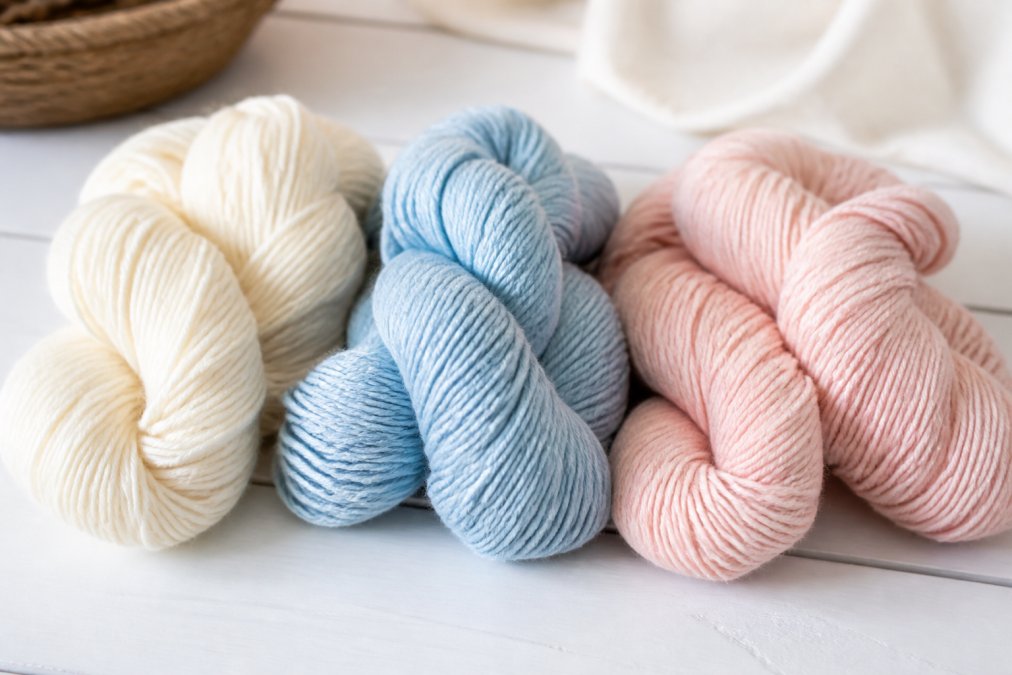
Superwash merino wool is the most versatile fiber for baby sweaters. It's warm without being heavy, has natural elasticity that holds shape over time, and is machine washable, essential for anything a baby wears regularly. The key word is "extra-fine." Standard merino has a micron count in the mid-20s; extra-fine merino typically falls below 20 microns, where most people stop feeling any prickling. DROPS Baby Merino is 100% extra-fine superwash merino and is one of the most widely used baby yarns because it delivers genuine softness at an accessible price.
Best for: Cool-weather garments, heirloom-quality sweaters, textured stitch patterns. Watch out for: Merino can be warm for summer babies in humid climates.
Organic Cotton
Cotton knits differently from wool. It has no elasticity, so gauge swatches matter more, and finished garments can grow slightly with washing. The trade-off is breathability: cotton allows air circulation that wool cannot, making it ideal for spring and summer sweaters or babies who run warm.
Appalachian Baby Organic Cotton Sport Weight is grown, spun, and dyed entirely within the United States using eco-friendly, low-impact dyes. That domestic supply chain is rare in yarn production and gives it strong sustainability credentials. It's machine washable and dryable, solving the care problem that plagues many cotton yarns.
Best for: Warm-weather wear, babies with sensitive or reactive skin, parents prioritizing organic and domestic sourcing. Watch out for: No stretch means sizing needs to be precise.
Acrylic and Synthetic Blends
Modern microfiber acrylics, particularly nylon blends like Plymouth Yarn Dreambaby DK, are genuinely soft, extremely durable, and hold color well over repeated washing. The honest limitation is breathability: synthetic fibers trap heat more than natural ones, which matters in warmer climates or for babies who overheat easily.
Acrylic is the most affordable option, widely available, and almost impossible to damage in the wash. Pilling is a legitimate concern with some acrylics, but the nylon content in Dreambaby DK helps significantly with pilling resistance compared to pure acrylic.
Best Yarn Weight for Baby Sweaters: DK vs. Worsted
The best yarn weight for baby sweaters is DK weight for most projects, with worsted weight as a practical alternative for faster knitting and slightly warmer garments.
DK weight (yarn weight #3) knits to roughly 22 stitches per 4 inches on US size 5-7 needles. It produces fabric with good drape and stitch definition, so textured patterns show clearly. DK is the industry standard for baby garments because the finished fabric is light enough for comfort without being flimsy.
Worsted weight (yarn weight #4) knits faster and produces thicker fabric. For beginners, worsted is more forgiving because gauge is easier to hit and stitches are easier to see. The trade-off is warmth: a worsted sweater is noticeably heavier, making it better suited to fall and winter wear.
| Weight | Gauge (per 4") | Best For | Typical Needle Size |
|---|---|---|---|
| Sport (#2) | 24-26 sts | Newborn sizes, fine detail | US 3-5 |
| DK (#3) | 21-24 sts | Most baby sweaters | US 5-7 |
| Worsted (#4) | 16-20 sts | Winter wear, beginner knitters | US 7-9 |
Always knit a gauge swatch before starting. A single stitch difference per inch across a 24-inch chest circumference adds up to a garment that's two sizes off.
Top Baby Sweater Yarn Picks for Every Budget
Best for Sensitive Skin: DROPS Baby Merino
DROPS Baby Merino is 100% extra-fine superwash merino wool with smooth, even stitch structure that works beautifully for both simple stockinette and complex textured patterns. It's hypoallergenic by design, machine washable on a gentle cycle, and comes in many colors. The extra-fine micron count separates it from standard wool.
Pros: Exceptional softness, good stitch definition, machine washable Cons: Warm climates may find it too insulating; requires a gentle wash cycle
Best Organic Option: Appalachian Baby Organic Cotton Sport Weight
For parents wanting full traceability from farm to finished skein, Appalachian Baby Organic Cotton Sport Weight is the standout choice. It's grown, spun, and dyed in the United States using eco-friendly processes, certified organic, and machine washable and dryable. Stitch definition is excellent.
Pros: Certified organic, domestic supply chain, machine washable, breathable Cons: Higher price per skein, limited color range, no elasticity
Best Affordable Synthetic: Plymouth Yarn Dreambaby DK
Plymouth Yarn Dreambaby DK is a 50% microfiber acrylic, 50% nylon blend that competes with natural fiber options on softness while undercutting them significantly on price. The nylon content keeps pilling to a minimum. This is the yarn for sweaters needing to survive heavy daily use.
Pros: Very soft, extremely durable, machine wash and tumble dry, affordable Cons: Synthetic blend, less breathable than natural fibers
Best Luxury Blend: Ella Rae Cashmereno Sport
Ella Rae Cashmereno Sport combines 55% merino wool, 33% acrylic, and 12% cashmere into a sport-weight yarn that is genuinely luxurious. The cashmere adds softness and warmth that pure merino cannot match, and the acrylic makes it machine washable on a cool, gentle cycle. According to Appalachian Baby Design's fiber sourcing notes, blending natural fibers with a small percentage of acrylic is one of the most effective ways to add washability without sacrificing hand feel.
Pros: Exceptional softness, warm yet breathable, machine washable Cons: Higher cost, requires careful washing to maintain quality
Best Budget Worsted: Caron Simply Soft and Red Heart Baby Hugs
Caron Simply Soft is 100% acrylic with unusually good drape for its weight class and comes in many colors. Red Heart Baby Hugs carries Oeko-Tex Standard 100 certification, putting it in a different category from generic budget acrylics. If safety certification matters and budget is a constraint, Red Heart Baby Hugs is the most defensible choice in this price range.
Pros (both): Affordable, widely available, machine washable, soft Cons: Acrylic breathability limitations; Caron Simply Soft can pill with heavy use
Machine Washable Baby Yarn: Why It Matters and What to Look For
Machine washable baby yarn is essential for any garment worn regularly. A sweater requiring hand washing will sit in a drawer.
Superwash wool has been chemically treated to prevent felting, allowing machine washing on a gentle, cool cycle. Most acrylics and synthetic blends are inherently machine washable because synthetic fibers don't felt. Cotton is generally machine washable but can shrink on hot cycles.
What to look for on the label:
- Machine wash, gentle cycle, cold, standard for superwash merino
- Machine wash and tumble dry low, typical for acrylic and nylon blends
- Machine wash and tumble dry, the most convenient, usually synthetic or cotton
Yardage, Gauge, and Project Estimation for Baby Sweaters
Yardage planning is often skipped and is the reason knitters run out of yarn mid-sleeve. A standard baby sweater in DK weight for a 6-12 month size typically requires between 400 and 600 yards, depending on pattern complexity and stitch density. Worsted weight uses fewer yards for the same size because each stitch covers more area.
General yardage estimates by size:
- Newborn (0-3 months): 300-400 yards, DK weight
- 3-6 months: 350-450 yards, DK weight
- 6-12 months: 400-600 yards, DK weight
- 12-18 months: 500-700 yards, DK weight
Always buy one extra skein. Dye lots vary between production runs, and a skein purchased six months later will often have visible color difference. Gauge affects yardage directly. Knit your swatch, measure it accurately, and adjust needle size before casting on.
How to Wash Hand-Knitted Baby Sweaters Safely
Hand-knitted baby sweaters should be washed by hand or on a machine's wool/delicate cycle in cold water, using a gentle, fragrance-free detergent formulated for wool or delicates.
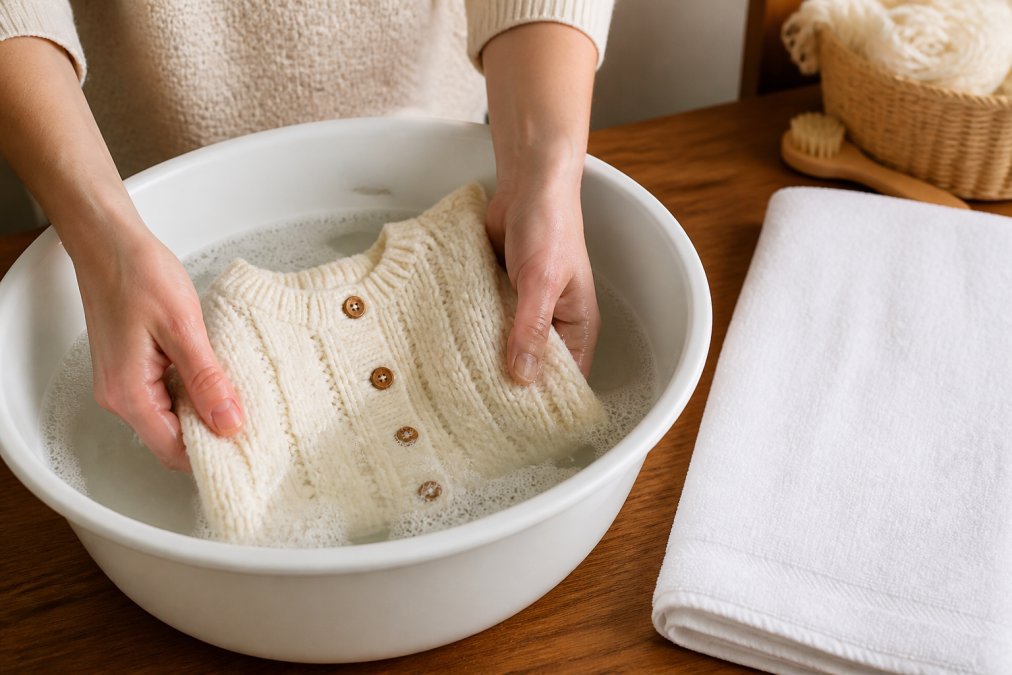
The most common mistake is wringing. Wringing a wet knit distorts the fiber structure and permanently stretches the garment. Instead, press the sweater gently against the basin side to remove excess water, then roll it in a clean towel and press again. Lay the sweater flat to dry on a clean surface, reshaping it to original dimensions while still damp. Never hang a wet knit: the weight of water will stretch it out of shape.
For superwash merino, cool machine washing on a gentle cycle is generally safe, but the dryer is risky unless the label explicitly says tumble dry. Heat is the enemy of wool. For acrylic and synthetic blends, tumble drying on low is usually fine.
Step-by-step washing guide for hand-knitted baby sweaters:
- Fill a clean basin with cool water and add a small amount of fragrance-free wool wash or gentle detergent
- Submerge the sweater and gently squeeze water through the fabric. Do not rub or twist
- Let soak for 5-10 minutes
- Drain and refill with clean cool water to rinse. Repeat until no soap remains
- Press the sweater gently against the basin to remove excess water. Do not wring
- Roll in a clean dry towel and press firmly to absorb moisture
- Lay flat on a fresh towel or drying rack, reshape to original dimensions, and air dry completely
For babies with sensitive skin, fragrance-free detergents are strongly recommended. The American Academy of Dermatology on infant skin care notes that fragrances are among the most common contact irritants for infant skin.
Choosing yarn for a baby sweater involves real trade-offs between softness, safety, durability, and care requirements. Custom Knits for Baby sources only the softest yarns for every hand-knitted, personalized sweater we make, with the same attention to fiber quality and skin safety this guide describes. Whether you're knitting yourself or looking for a finished sweater personalized with your child's name, the fiber choices you make now determine how comfortable and lasting the garment will be. Order yours today and give your little one a keepsake worth keeping.
Frequently Asked Questions
What type of yarn is best for making baby clothes?
Superwash merino wool, organic cotton, and soft acrylic blends are the most popular choices for baby clothes. Superwash merino is warm, breathable, and machine washable. Organic cotton suits warm climates and babies with very sensitive skin. Soft acrylic blends like DK-weight microfiber options are durable, affordable, and easy to launder. The best yarn for baby sweaters depends on your climate, the baby's skin sensitivity, and how often the garment will be washed.
Is wool safe for knitting baby sweaters?
Untreated wool can irritate delicate skin, but superwash-treated extra-fine merino wool is a different story. Superwash merino has the lanolin and coarse fiber scales processed out, making it noticeably softer and far less likely to cause a reaction. Yarns like DROPS Baby Merino are labeled hypoallergenic and non-itchy for this reason. Always check that the wool is labeled superwash and extra-fine before using it for a baby sweater, especially for newborns.
How do I choose machine washable yarn for baby items?
Look for yarns labeled superwash, machine washable, or tumble dry low on the ball band. Superwash merino wool has been treated so the fiber scales do not felt in the wash. Acrylic and nylon blends are inherently machine washable. For certified safety, look for Oeko-Tex Standard 100 certification on the label, which confirms the yarn has been tested for harmful substances. Always check the care instructions on the specific skein before starting a project.
What yarn weight should I use for a baby sweater?
DK weight (yarn weight #3) is the most popular choice for baby sweaters. It knits up at roughly 22 stitches per 4 inches on US size 5 or 6 needles, producing a fabric with good stitch definition that is not too heavy for small bodies. Worsted weight (#4) works well for cooler climates and knits faster, but the resulting fabric can feel bulky on newborns. Sport weight is a good middle ground for heirloom-style sweaters with fine detail.
How much yarn do I need for a baby sweater?
A newborn sweater typically requires 200 to 400 yards of DK-weight yarn, while a 12-month size may need 400 to 600 yards. Worsted-weight projects use fewer yards because the fabric builds faster, but the yardage per skein is also lower. Always knit a gauge swatch before starting so you can calculate yardage accurately. Buy one extra skein of the same dye lot as a buffer, since dye lots can vary noticeably between batches.
What are the benefits of using cotton versus acrylic for baby sweaters?
Cotton is a natural fiber with excellent breathability, making it ideal for warmer months or babies who run warm. Organic cotton, certified free of pesticide residues, is especially gentle on sensitive skin. Acrylic is lighter on the budget, widely available, and fully machine washable without any special treatment. The trade-off is breathability: acrylic traps more heat and moisture than cotton. Many knitters choose a cotton-acrylic blend to get some of the breathability of natural fibers alongside the easy care of synthetic.
How do I ensure a yarn is soft enough for a newborn's skin?
Run the yarn across the inside of your wrist or forearm before buying. If it scratches or prickles there, it will irritate a newborn's face and neck. Look for yarns described as extra-fine or super-soft, and check for Oeko-Tex Standard 100 certification to confirm no harmful chemicals are present. For the most sensitive skin, extra-fine superwash merino or Oeko-Tex certified organic cotton are the safest starting points. Avoid any yarn with a high micron count or a scratchy hand feel.