 how-to
Best Yarn for Baby Sensitive Skin: A 2026 Guide
Table of Contents
- Understanding Yarn Fiber Types for Sensitive Baby Skin
- Is Wool Safe for Baby Skin? Merino and Superwash Options
- Organic Cotton and Bamboo Viscose for Sensitive Skin
- Best Yarn for Baby Sweaters: Top Fiber Choices
- Chemical Residue, Dyes, and Certifications to Look For
- How to Wash Baby Knitwear: Machine Washability and Care Instructions
- Choosing the Right Yarn Weight and Gauge for Your Baby Project
- Budget-Friendly Sensitive Skin Options Without Compromise
- Frequently Asked Questions
Last Updated: August 23, 2026
Understanding Yarn Fiber Types for Sensitive Baby Skin
When knitting for a baby with sensitive skin, fiber choice matters more than almost anything else. The wrong yarn can trigger irritation and rashes that turn a cherished gift unwearable. At Custom Knits for Baby, we understand this tension: you want something beautiful and personal, but not at the cost of your baby's comfort. This guide walks you through the best yarn for baby sensitive skin, breaking down fiber types, certifications, and care instructions so you can make an informed choice.
Most yarn marketed as "baby-safe" doesn't address the core issue: fiber diameter and chemical residue. A yarn might be labeled organic, but if it hasn't been tested for harmful dyes or if the fiber diameter is too coarse, it'll still irritate delicate skin. Below, we'll show you how to evaluate yarn beyond marketing claims, identify which fibers genuinely work, and spot the certifications that actually matter.
Natural vs. Synthetic Fibers
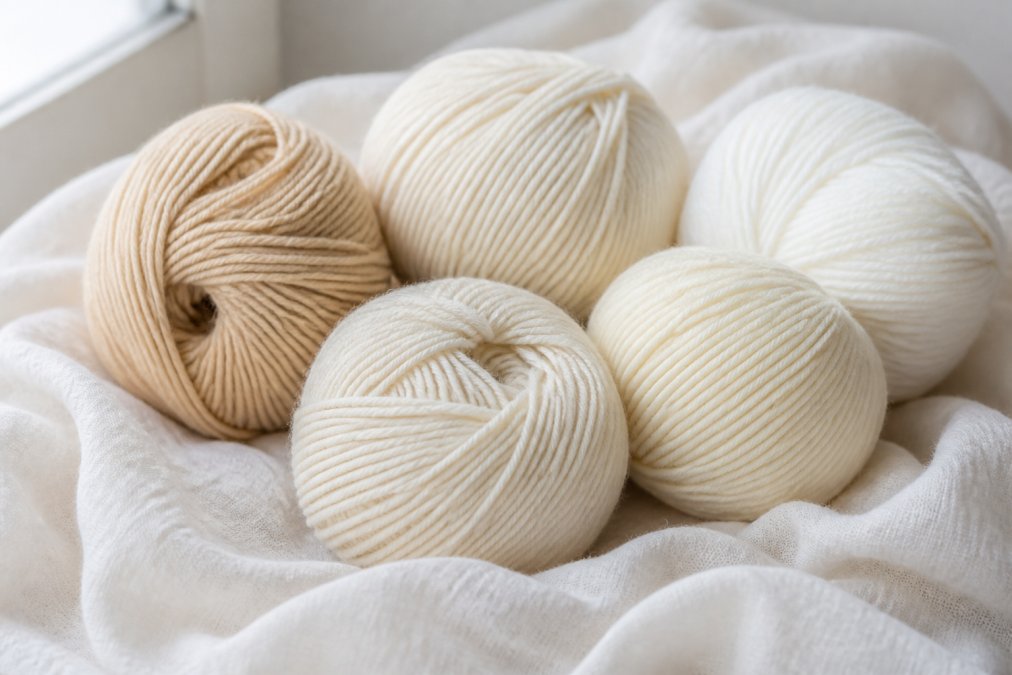
Natural fibers like merino wool, organic cotton, and bamboo viscose perform better for sensitive skin than synthetics like acrylic. Natural fibers allow moisture to move away from skin, preventing buildup that triggers irritation. Synthetic fibers trap heat and moisture, creating an environment where rashes develop more easily.
However, not all natural fibers are equal. A coarse wool irritates even if 100% natural. The key distinction isn't natural versus synthetic, it's fiber diameter. A fiber at 20 microns or finer feels smooth against skin. Anything above 30 microns feels scratchy, regardless of fiber type (peer-reviewed research).
Synthetic fibers do offer consistency and durability. For washable, low-maintenance clothing, high-quality acrylic can work. But for direct skin contact, natural fibers almost always win because they regulate temperature and allow skin to breathe.
Why Fiber Diameter and Microns Matter
Fiber diameter, measured in microns, is the single most reliable predictor of whether yarn will feel itchy or soft. Baby skin is sensitive to fibers thicker than about 25 microns; 20 microns or finer is ideal (the American Academy of Dermatology). Most merino wool marketed as "baby" ranges from 17-20 microns. Standard merino sits around 24-26 microns and often feels scratchy.
When shopping, look for micron specifications. Many retailers list it; if they don't, that's a red flag. Yarn labeled "extra-fine" or "superfine" likely falls into the 18-22 micron range. Standard or worsted weight merino often tops out at 25-30 microns, too coarse for sensitive skin.
Cotton and bamboo fibers are measured by staple length. Longer staple cotton (like Egyptian cotton) produces smoother yarn because fibers can be spun more tightly. When evaluating cotton yarn, ask whether it's long-staple or short-staple. Long-staple is better for sensitive skin.
Is Wool Safe for Baby Skin? Merino and Superwash Options
The biggest misconception about wool is that it's automatically itchy. Standard wool can be, but merino wool, especially extra-fine merino, is soft enough for baby skin. Merino is finer and smoother than traditional sheep's wool, making it genuinely suitable for sensitive skin when you choose the right weight.
Understanding Merino Wool Sensitivity
Merino wool is hypoallergenic and naturally moisture-wicking, pulling sweat away from skin instead of trapping it. This makes it better than acrylic for babies who tend to overheat. The fiber also regulates temperature, keeping babies warm without overheating and reducing heat rash risk.
Not all merino is equal. Merino labeled as "fingering weight" or "sport weight" is typically 18-20 microns. Merino sold as "worsted weight" or "aran weight" often runs 24-26 microns and feels noticeably scratchier. For sensitive skin, stick to fingering, sport, or DK weight merino. These lighter weights are fine enough to feel soft.
Standard merino requires hand-washing or a wool-specific machine cycle. For parents wanting true machine washability, superwash merino is the answer.
Superwash Merino: The Hypoallergenic Alternative
Superwash merino is regular merino wool treated to remove fiber scales, allowing machine washing without felting. The treatment is mechanical, not chemical, so it doesn't add irritants. For busy parents, this is a game-changer.
Superwash merino retains all benefits of regular merino: it's hypoallergenic, moisture-wicking, and temperature-regulating. Products like DROPS Baby Merino and Pascuali Merino Baby are superwash-treated, extra-soft, machine washable, and hold up to frequent washing without losing shape or softness.
Organic Cotton and Bamboo Viscose for Sensitive Skin
Cotton and bamboo viscose are ideal for summer baby garments and for parents avoiding wool. Both are breathable, naturally hypoallergenic, and gentle on sensitive skin.
Benefits of Organic Cotton
Organic cotton is grown without synthetic pesticides or fertilizers, meaning fewer chemical residues. For babies with extremely sensitive skin or allergic reactions, organic cotton eliminates one potential irritant. The yarn is naturally breathable, ideal for warm months or babies who overheat.
Cotton has less elasticity than wool or bamboo. It doesn't bounce back as easily, and mistakes can be harder to fix. The finished garment won't hold its shape quite as well as wool, though it still holds up beautifully through dozens of washes.
Appalachian Baby Organic Cotton Sport Weight is grown and spun in the United States using low-impact dyes. Gazzal Organic Baby Cotton is OEKO-TEX certified, verified free from harmful substances. Both are excellent for sensitive skin.
Why Bamboo Is Ideal for Sensitive Skin
Bamboo viscose is made from bamboo pulp processed into fiber. The resulting yarn is incredibly soft, often softer than cotton, with a silky drape. Bamboo is naturally moisture-wicking and breathable, perfect for babies prone to heat rash or excessive sweating.
Modern viscose production has significantly reduced chemical waste compared to older methods. If environmental impact matters, look for bamboo viscose made using closed-loop processing, where chemicals are recycled rather than released.
Bamboo viscose blends, like Kumdkd Bamboo Cotton Yarn (70% bamboo, 30% cotton), combine softness with durability. These blends are hypoallergenic, breathable, and durable enough for frequent washing.
Best Yarn for Baby Sweaters: Top Fiber Choices
When choosing yarn for baby sweaters, balance softness, durability, care requirements, and cost. Different fibers excel in different situations.
Baby Alpaca: Softness Without Lanolin
Baby alpaca is exceptionally soft and naturally lanolin-free, ideal for babies with wool sensitivities or lanolin allergies. The fiber is lighter and less dense than merino wool, so garments don't feel heavy or bulky. They drape beautifully and provide warmth without weight.
Baby alpaca is less elastic than wool, requiring careful tension when knitting. The finished garment won't have the same memory as wool. For sweaters worn and cared for gently, this isn't a major issue. Shepherd Textiles baby alpaca is handspun, 100% fiber with no chemical treatments.
Milk Cotton and Hypoallergenic Blends
Milk cotton is made from milk protein and cotton. It's hypoallergenic, OEKO-TEX certified, and designed for sensitive skin. The yarn is soft, has good elasticity (better than pure cotton), and is machine washable. It's also colorfast, so dyes won't bleed during washing.
Milk cotton blends combine softness with durability and are easier to work with than pure cotton because they have more elasticity. Baby Milk Cotton Yarn from Walmart is fingering weight, OEKO-TEX certified, and machine washable, an excellent budget-friendly choice.
Chemical Residue, Dyes, and Certifications to Look For
Not all yarn labeled "baby-safe" has been tested for harmful chemicals or dyes. Two certifications stand out: OEKO-TEX and GOTS.
OEKO-TEX and GOTS Certification Explained
OEKO-TEX Standard 100 verifies yarn has been tested for harmful substances including heavy metals, formaldehyde, and problematic dyes (oeko-tex.com). Testing occurs at multiple production stages, and certification renews annually. OEKO-TEX on a label means the yarn is independently verified as safe for sensitive skin.
GOTS (Global Organic Textile Standard) goes further, certifying not just that yarn is chemical-free, but that cotton was grown organically and processed with strict environmental and labor standards. GOTS certification is more rigorous and expensive. For parents prioritizing both safety and environmental impact, GOTS-certified yarn is worth the investment.
Hobbii Baby Cotton Organic is GOTS-certified, meaning Egyptian cotton was grown organically and processed according to strict standards. Gazzal Organic Baby Cotton carries OEKO-TEX certification. Both are excellent choices.
Avoiding Itchy or Prickly Fibers
Always check fiber diameter or micron count. If unlisted, ask the retailer or manufacturer. Feel the yarn in person if possible. Be cautious of yarn labeled only as "baby weight" without specifying fiber type or diameter. Avoid yarns with fuzzy or hairy texture, even if initially soft, these shed fibers that irritate sensitive skin. Smooth, tightly spun yarns are safer.
How to Wash Baby Knitwear: Machine Washability and Care Instructions
How you wash a baby garment matters as much as the yarn you choose. The wrong method can damage delicate fibers, cause pilling, or leave detergent residue that irritates skin.
Machine Washable Yarns vs. Hand-Wash Only
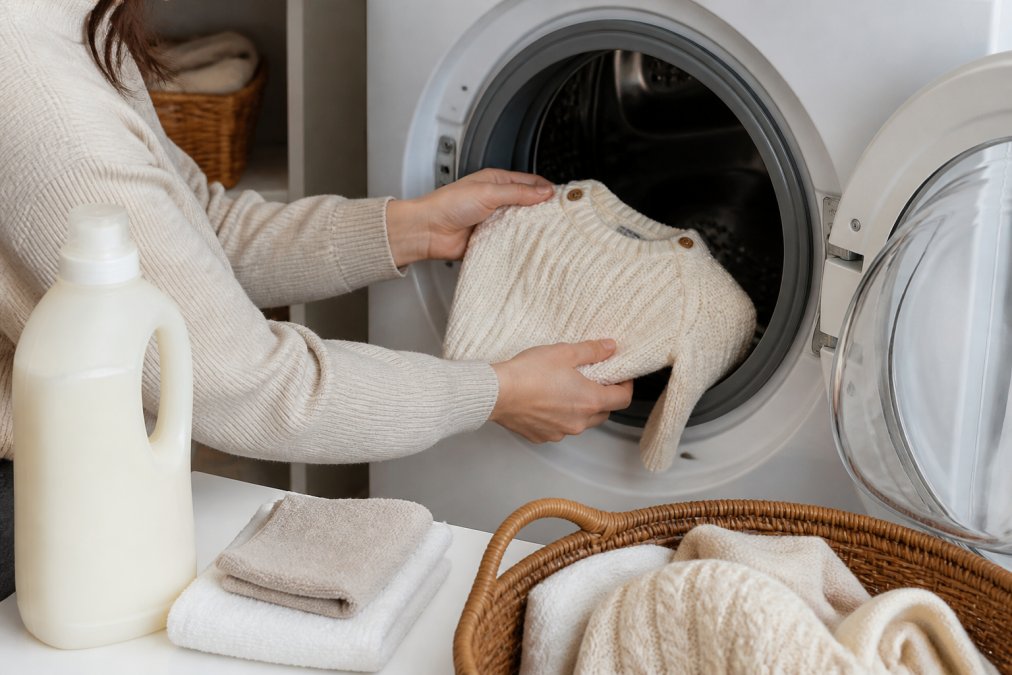
Superwash merino and most cotton yarns are genuinely machine washable. Standard merino wool, baby alpaca, and untreated wool require hand-washing or a wool-specific machine cycle to prevent felting. For parents juggling multiple loads, machine washability is practical.
When machine washing, use a gentle cycle with cold water and wool-specific detergent. Avoid regular laundry detergent, which is too harsh and leaves residue. Wash in a mesh bag to protect the garment. Air dry whenever possible; heat can damage fibers and cause shrinkage.
Hand-wash-only yarns require a different approach. Fill a sink with lukewarm water, add wool-specific detergent, and gently submerge the garment for 15-20 minutes. Rinse thoroughly in cool water until clear. Gently squeeze out excess water, never wring. Lay flat to dry on a clean towel.
Preventing Pilling and Maintaining Softness
Pilling occurs when short fibers work to the surface and ball up. It's more common in lower-quality yarn and high-friction areas. Minimize pilling by washing inside out in a mesh bag. Avoid over-washing; once every 2-3 weeks is sufficient.
When pilling occurs, use a fabric shaver or pilling comb to gently remove pills. Never pick by hand, which damages underlying fibers. Use gentle detergent specifically formulated for delicate fibers. Regular laundry detergent contains surfactants and enzymes that break down delicate fibers over time. Store clean garments in a cool, dry place away from direct sunlight.
Choosing the Right Yarn Weight and Gauge for Your Baby Project
Yarn weight and gauge determine how the finished garment fits and feels. For baby clothing, lighter weights (fingering, sport, DK) are generally better than heavier weights because they create delicate, breathable garments.
Fingering weight (around 400-500 yards per 100 grams) creates fine, delicate fabric perfect for newborns. Sport weight (300-400 yards per 100 grams) works well for babies up to 6 months. DK weight (250-300 yards per 100 grams) is versatile for most baby projects from newborn through 12 months.
Always knit a gauge swatch before starting. For baby garments, a slightly loose gauge creates softer, more breathable fabric than tight gauge. If your gauge is too tight, the garment feels stiff and less comfortable. Choose patterns designed for your yarn weight. For sensitive skin, err toward lighter, airier garments rather than dense, heavy ones.
Budget-Friendly Sensitive Skin Options Without Compromise
Quality yarn for sensitive skin doesn't require premium pricing. Appalachian Baby Organic Cotton Sport Weight offers organic certification and US production at reasonable prices. Gazzal Organic Baby Cotton is OEKO-TEX certified and widely available competitively. Both deliver genuine safety and softness without premium pricing.
Milk cotton blends from retailers like Walmart offer OEKO-TEX certification and machine washability at budget-friendly prices. These blends are forgiving to knit with, meaning fewer mistakes and less wasted yarn.
The real money-saver is choosing yarn weight and gauge that works for your project. Fingering weight requires more yardage than sport or DK weight. If budget is tight, choose sport or DK weight and adjust your pattern accordingly. You'll use less yarn and still create a beautiful, safe garment.
When Custom Knits for Baby creates hand-knitted sweaters, we prioritize yarn quality and softness. Each piece is crafted with fibers tested and verified safe for delicate skin, ensuring your baby stays warm while preventing irritation. Our personalized designs create one-of-a-kind keepsakes that are both beautiful and genuinely comfortable to wear.
Choosing the right yarn for a baby with sensitive skin requires attention to fiber type, diameter, certifications, and care instructions. The best yarn combines softness, breathability, and verifiable safety through certifications like OEKO-TEX or GOTS. Whether knitting a simple sweater or commissioning a custom piece, prioritize fiber quality and test results over marketing claims. Custom Knits for Baby specializes in hand-knitted garments crafted from the softest, safest yarns available, personalized with your child's name to create a timeless keepsake that's as comfortable as it is meaningful. Order yours today and give your baby the gift of genuine comfort.
Frequently Asked Questions
What type of yarn is best for sensitive skin?
Organic cotton, superwash merino, bamboo viscose, and baby alpaca are the top choices for sensitive skin. Look for yarns with low fiber diameter (under 24 microns), OEKO-TEX or GOTS certification, and hypoallergenic properties. Avoid synthetic acrylic fibers and untreated wool, which can trigger irritation. The best yarn for baby sensitive skin combines softness, breathability, and chemical-free processing.
Is wool safe for baby skin?
Yes, when it's the right type. Extra-fine merino wool and superwash merino are safe for babies with sensitive skin because they have smaller fiber diameters (around 20 microns) that don't irritate. Standard wool can be scratchy and trigger eczema. Superwash merino is treated to be machine washable, making it practical for baby garments. Always check that the yarn is labeled hypoallergenic and free from lanolin residue.
How do I know if a yarn is hypoallergenic?
Check for certifications like OEKO-TEX Standard 100, GOTS (Global Organic Textile Standard), or dermatological testing labels. Look at the fiber content, organic cotton, bamboo viscose, baby alpaca, and superwash merino are naturally hypoallergenic. The label should specify fiber diameter in microns (lower is better; under 24 microns is ideal). Avoid yarns with synthetic dyes or chemical residues. Contact the yarn maker if certifications aren't listed.
What yarn should I avoid for babies with sensitive skin?
Avoid standard acrylic fibers, which don't breathe and can trap heat and moisture. Skip untreated wool with high lanolin content, which causes itching and irritation. Avoid yarns with harsh synthetic dyes or chemical residues, and steer clear of low-quality blends that mix natural fibers with low-grade synthetics. Also skip yarns labeled only as 'wool' without specification of fiber diameter, these are often coarser and less suitable for delicate skin.