 how-to
How to Choose Sentimental Baby Keepsakes: A 2026 Guide
Table of Contents
- Step 1: Decide What Deserves to Be Kept
- Step 2: Explore Unique Baby Keepsakes for Newborns
- Step 3: Custom Name Sweaters and Other Personalized Keepsakes
- Step 4: How to Preserve Baby Clothes for the Long Term
- Step 5: Build a Memory Box That Stays Organized
- A Minimalist Approach to Sentimental Baby Keepsakes
- Common Mistakes When Choosing Sentimental Baby Keepsakes
- Conclusion
- Frequently Asked Questions
Last Updated: September 27, 2026
Step 1: Decide What Deserves to Be Kept
Learning how to choose sentimental baby keepsakes starts with one hard truth: you cannot keep everything. The onesie your baby wore home matters more than the fifteenth plain bodysuit. Sentimental baby keepsakes are the items you save on purpose, not the pile you store out of guilt.

- The coming-home outfit
- The first holiday sweater
- One hospital bracelet
- The hat from the newborn photos
- A single favorite blanket
Step 2: Explore Unique Baby Keepsakes for Newborns
Unique baby keepsakes for newborns fall into a few clear types. Knowing the types makes the choice easier.
Step 3: Custom Name Sweaters and Other Personalized Keepsakes
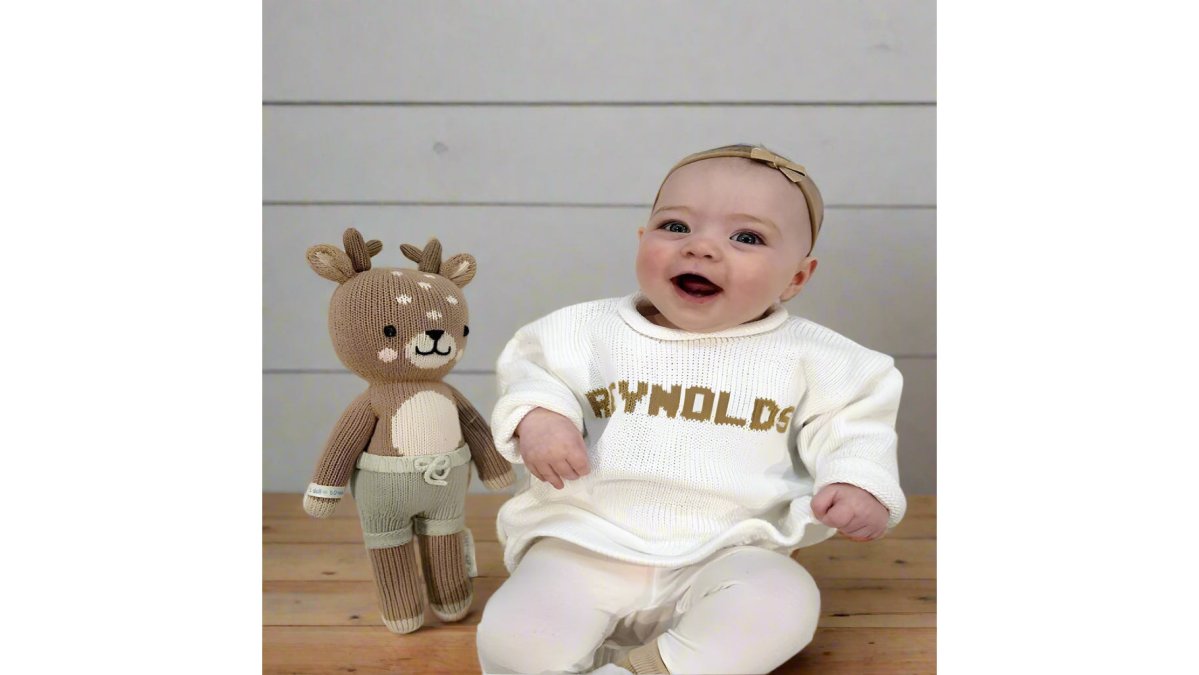
Personalized keepsakes carry the most emotional value because they belong to one child and no one else. A name changes a plain sweater into an heirloom.
- The name is part of the fabric, not stuck on
- The yarn feels soft against bare skin
- The size leaves a little room to grow
- It can go in the washing machine
Step 4: How to Preserve Baby Clothes for the Long Term
Knowing how to preserve baby clothes comes down to controlling four enemies: light, moisture, heat, and acid. Time itself does very little damage. The environment does almost all of it.
What actually ruins a stored baby garment
- Light breaks down cotton fibers and fades dye. Even indirect sunlight through a closet door adds up over a decade.
- Moisture above roughly 65% relative humidity invites mildew and musty odor. Below about 30% and fibers dry out and stiffen.
- Heat accelerates every chemical reaction, including the one that turns white cotton yellow.
- Acid from cardboard boxes, wood shelves, tape, and standard tissue paper migrates into fabric and causes brown scorch-like stains that cannot be washed out.
- Off-gassing from plastic bins, dry-cleaning bags, and cedar chests traps vapors against the fabric.
A storage routine that holds up over decades
- Wash the item with a gentle, fragrance-free detergent. Skip fabric softener and dryer sheets, the residue attracts pests and yellows over time.
- Let it air dry fully. Any dampness invites mildew.
- Remove every pin, tag, and plastic clip. Metal rusts; adhesive leaves a permanent shadow.
- Wrap it in acid-free, lignin-free tissue paper. Regular paper and cardboard turn yellow and stain fabric.
- Pad the folds. Place crumpled tissue inside sleeves and along crease lines so the fabric rests on curves, not sharp edges.
- Lay it flat in an archival box made of acid-free board. Folding creases set permanently over years.
- Store the box in a cool, dark, dry spot, a bedroom closet shelf is ideal. Not an attic, basement, garage, or bathroom.
- Inspect once a year. Unfold, let the fabric breathe for an hour, then refold along new lines so the same crease never becomes a permanent break.
The white-cotton yellowing problem
White and cream cotton yellows for two reasons: leftover body oils and detergent residue oxidize, and plastic storage traps the vapors that cause it. The fix is boring but effective, wash thoroughly, store in breathable acid-free materials rather than sealed plastic, and keep the box out of heat. A cotton sweater stored in a sealed bin in a warm closet will yellow faster than the same sweater stored in an acid-free box in a cool room.
Handling a piece you plan to pass down
For an heirloom you intend to hand to your child in twenty or thirty years, hand washing and flat drying preserve the shape best. Avoid dry cleaning unless a stain demands it, the solvents leave residue and the pressing can flatten texture.
Digital backup for the physical item
Photograph the garment flat, then photograph any label or tag. Store those images in the same cloud folder as the rest of your child's records. If the physical piece is ever lost to fire, flood, or pest damage, the photo and the written story are what remain. Back up that folder to a second location, and re-verify the files open correctly once a year, cloud accounts get locked and formats change.
Step 5: Build a Memory Box That Stays Organized
A memory box only works if you can find things in it. Label everything, and keep one box per child.
Use this simple system:
| Item Type | Storage Method | Where to Keep It |
|---|---|---|
| Sweaters and clothing | Acid-free tissue, flat | Archival box |
| Paper and prints | Plastic sleeve | Binder or flat file |
| Small objects | Cotton bag | Compartment box |
| Digital files | Cloud folder | Backed up online |
A Minimalist Approach to Sentimental Baby Keepsakes
You do not need a room full of boxes to honor your child's first years. A minimalist keepsake strategy keeps the emotional value and drops the clutter. The hard part is not deciding to keep less, it is deciding which few items earn a permanent spot.
A three-question filter for every item
Before anything goes in the box, ask:
- Does it carry a specific story? "The sweater she wore home" passes. "A onesie she might have worn" does not.
- Can it survive twenty years in storage? Natural fibers stored correctly hold up. Glued-on decorations, heat-pressed names, and cheap plastic trinkets do not.
- Would my child want to hold this at eighteen? If the answer is a shrug, it is a photo, not a keepsake.
Two yeses out of three is usually enough. One yes is a sign to photograph it and let it go.
Custom Name Sweater for Infants and →
The ten-item rule, and why it works
Pick a fixed number of physical items per child, ten is a common target. Once the box is full, something has to come out before something new goes in. This forces real choices instead of slow accumulation, and it keeps the box small enough that you actually open it.
A workable split for most families:
- Two or three garments (the coming-home outfit, one meaningful sweater, one small accessory)
- Two paper items (a birth stat print, a hospital bracelet or note)
- Two small objects (hand and foot prints, first shoes, a lock of hair)
- One blanket or soft item
- One or two items that are still in use, like a wearable custom piece
Everything else becomes a photo in the digital folder.
How to tell an heirloom piece from a disposable one
This is where most guides stop, and it is the question that actually matters. An item that will last twenty-plus years usually shows these traits:
- The personalization is structural, not applied. A name knitted directly into the fabric, stitch by stitch, is part of the garment. A name printed, glued, or heat-pressed on top is a coating that will crack, peel, or fade within a few washes.
- The fiber is natural and long-staple. Soft cotton yarn holds up to repeated washing and storage far better than synthetic blends, which pill and yellow.
- The construction is finished, not fused. Rolled necklines, hand-finished hems, and reinforced seams survive decades. Glued hems and fused interfacing do not.
- It is machine washable. A piece that requires special care will not get worn, and an unworn piece never becomes a memory.
- It fits now and later. A slightly generous cut means the child wears it for more than one season, which is what turns a garment into a story.
Go digital where you can
Scan the papers, photograph the outfits flat, and keep one cloud folder per child. Back it up to a second location. The physical items you keep then become the truly special ones, and the digital folder carries the rest without the clutter.
Common Mistakes When Choosing Sentimental Baby Keepsakes
Most keepsake regret comes from a handful of repeat mistakes. Here are the ones we see most.
- Keeping too much. A packed box gets ignored. A curated one gets opened.
- Using the wrong storage. Regular cardboard and tape stain fabric over time.
- Storing in the attic or basement. Heat, cold, and damp ruin textiles fast.
- Buying cheap personalization. Printed or glued names fade. Knitted names last.
- Waiting too long to decide. Sizes get outgrown, and the moment passes.
- Forgetting the story. An item with no note loses its meaning.
Conclusion
Choosing sentimental baby keepsakes is really a test of restraint. The parents who keep the fewest, best items end up with the ones their kids actually treasure.
Frequently Asked Questions
What makes a baby keepsake truly sentimental?
Sentimental value comes from the story attached to an item, not its price tag. A handcrafted sweater with your baby's name, the blanket they came home in, or a hat worn during their first photos holds meaning because it marks a specific moment. Custom details like a knitted name or birth stats make an item personal to your child, so it stays meaningful years later. Focus on pieces tied to a memory you want to revisit, not what looks best on a shelf.
Are handcrafted items better than mass-produced keepsakes?
Handcrafted pieces usually last longer and carry more personal detail. A custom made sweater knitted with your child's name in soft cotton yarn can be worn, washed, and passed down, while many mass-produced items wear out or fade quickly. Handcrafted also means the design is worked directly into the fabric, so nothing peels or cracks over time. For unique baby keepsakes for newborns, craftsmanship often outweighs volume.
How do I decide which baby items are worth keeping?
Start with items tied to a milestone: coming home, first birthday, or a holiday. Keep pieces that are durable and can be stored safely, like cotton clothing, printed photos, and a written record of birth stats. Limit yourself to a set number, such as ten items per year, so the collection stays curated. If you are unsure, ask whether you would want to show it to your child at age eighteen.
How can I organize and store sentimental baby items?
Use a keepsake box made from acid-free, archival materials to prevent yellowing. Store items in a cool, dry place away from direct sunlight, and avoid plastic bags that trap moisture. Label each box with the date and contents, and keep a digital archive of photos as a backup. For clothing, fold rather than hang to avoid stretching.