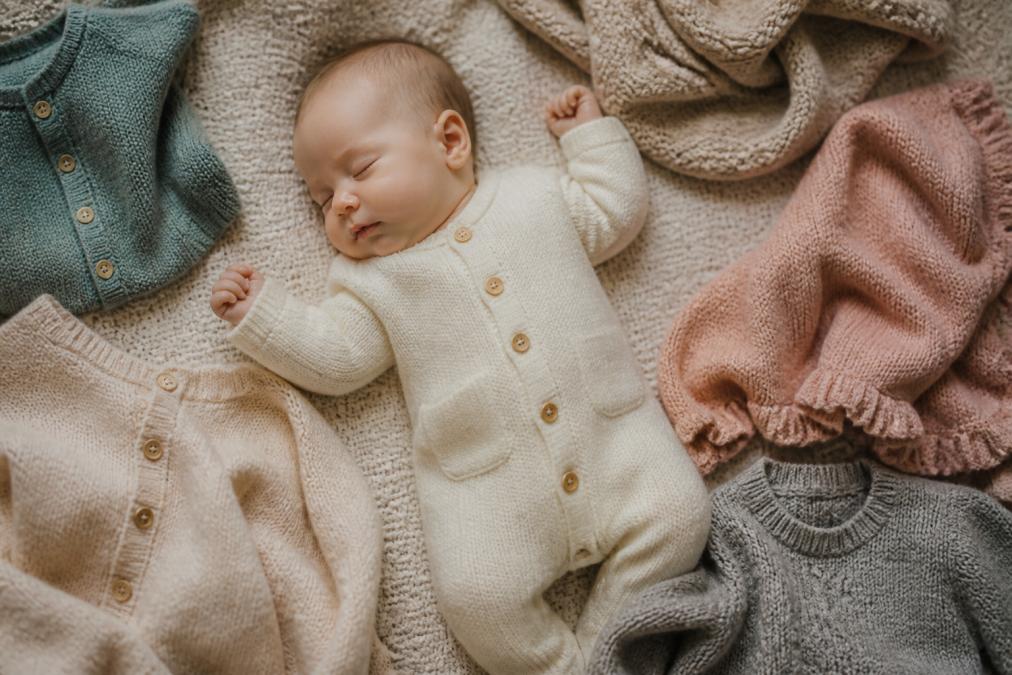
 listicle
Knitty Baby Alternative for Newborns: 7 Safe Picks
Table of Contents
- Why Parents Look for a Knitty Baby Alternative
- Personalized Baby Sweaters: A Keepsake With a Name
- Safe Yarn for Newborn Clothes: Fiber by Fiber
- 1. Custom Knits for Baby: Hand-Knit Sweaters With a Name
- 2. Coyuchi Cozy Cotton Organic Baby Blanket: The Non-Wool Pick
- 3. Malabrigo Rios Yarn: Superwash Merino for Heirloom Knits
- 4. Drops Baby Merino Yarn: Budget-Friendly and Oeko-Tex Certified
- 5. Lion Brand Coboo Yarn: Bamboo-Cotton for Warm Climates
- Frequently Asked Questions
Last Updated: September 10, 2026
Why Parents Look for a Knitty Baby Alternative
Search interest in a knitty baby alternative for newborns has climbed as more parents discover the sweetest-looking knit isn't always the safest or most practical. This guide from Custom Knits for Baby exists because the gap between "adorable" and "actually wearable on a newborn" is wider than most shoppers expect.
What Newborn Knits Actually Need to Do
A newborn knit must deliver three things at once: safety, comfort, and ease of care. Anything that fails one of those tests becomes a drawer decoration, no matter how beautiful it looks. So start with these non-negotiables, not color and pattern:
- Softness against skin. A newborn's skin is thin and reactive, so fiber content matters more than stitch count.
- Breathability. Overheating is a real concern for infants, which is why wool weights and fiber blends matter.
- Washability. Newborns generate laundry. A garment that requires hand-washing in cold water and flat-drying will get worn once.
- Safe closures. Snaps and buttons must be secure, because small parts are a choking hazard.
- Dressing ease. Anything that makes diaper changes harder will get abandoned by week two.
That last point is where most alternatives win or lose. A cardigan that opens flat and snaps at the front is far easier during a 3 a.m. change than a pullover that goes over a flailing head.
Personalized Baby Sweaters: A Keepsake With a Name
Personalized baby sweaters solve two problems that plague generic newborn gifts: they don't get lost in a daycare pile, and they carry meaning long after the baby outgrows them. But a keepsake that never leaves the drawer isn't doing its job. The difference between a sweater worn weekly and one worn once is almost entirely functional design, the part most custom makers and buying guides skip.
Design for Diaper Changes: The Detail That Decides Everything
Newborns need a diaper change every two to three hours, eight to twelve a day (healthychildren.org). Any garment that must come fully off for each one will be abandoned by week two. The design features that matter:
- Front-opening construction. A cardigan that opens flat lets you lay the baby on top and close it around them, rather than pulling fabric over a flailing head. This is the single biggest usability factor for a newborn garment.
- Crotch or leg openings. On one-piece knits, snap openings along the inner leg or crotch let you change a diaper without undressing the upper body. Standard on commercial sleepers and rare on hand-knits, so ask specifically.
- Stretch at the neckline and cuffs. A neckline wide enough to pass over the head and cuffs that stretch over the hand make dressing faster and less distressing.
- Secure, low-profile closures. Snaps are easier one-handed than buttons and harder for small fingers to work loose. Whatever the closure, it should be sewn or knitted in so it can't detach.
What to Check Before You Order
The name is the easy part. The details decide whether the sweater gets worn or stored.
- Yarn specification. Ask for exact fiber content and weight, not "soft yarn." If your baby has reacted to wool, get the materials list in writing before you commit.
- Closure type and placement. Confirm snaps or buttons, how many, and where. Front-opening with snaps down the placket is the most diaper-friendly layout.
- Opening design. For a one-piece, ask directly whether it has crotch or leg openings, and whether the maker can add them.
- Lead time. Custom knitting takes time and a shower deadline doesn't move. Confirm the production window before ordering.
- Size logic. Newborn sizing runs small and babies grow fast. A slightly larger size usually gets more wears, but too large defeats the stretch-at-the-cuff benefit.
- Care instructions. Ask how the maker recommends washing the piece, and whether the yarn is machine washable.
A personalized sweater with the right construction becomes the piece a parent reaches for first, easy at 3 a.m. and meaningful enough to keep. Get the design details right and the name on the chest is a bonus, not the whole point.
Safe Yarn for Newborn Clothes: Fiber by Fiber
Safe yarn for newborn clothes comes down to three variables: fiber content, how the yarn was treated, and whether it was screened for harmful substances. Softness is a symptom of getting those right, not proof of it, a yarn can feel cloud-soft and still irritate, because irritation is usually mechanical or chemical, not tactile.
Why Newborn Skin Reacts to Certain Fibers
A newborn's skin is roughly a third thinner than an adult's, and its barrier is still developing (peer-reviewed research). Two failure modes matter most:
- Mechanical irritation. Untreated wool fibers carry microscopic scales along the shaft. When those scales rub against thin skin, they catch and lift rather than glide, which is the physical cause of the "wool itch." Superwash treatment smooths or coats those scales, which is why treated merino behaves so differently from a rustic untreated wool.
- Chemical irritation. Residual dyes, formaldehyde-based finishes, and pesticide residue from conventional cotton growing can all trigger contact reactions. This is the risk that fiber softness tells you nothing about, and it's the reason certification exists.
A common pattern: a baby breaks out in a fine rash along the neck, wrists, and waistband, the friction points, rather than across the whole garment, pointing to mechanical irritation. A rash everywhere the fabric touches, including flat areas, is more likely chemical.
What the Certifications Actually Screen For
Certification is the closest thing to a guarantee without testing on your own baby. The two you'll see most on baby yarn labels:
- OEKO-TEX Standard 100. Screens the finished textile for harmful substances, including regulated and non-regulated chemicals, and assigns a product class. Class I is the strictest tier, intended for babies and toddlers up to age three, that's the baby-specific certification, not the general one (oeko-tex.com).
- GOTS (Global Organic Textile Standard). Covers organic fiber content plus processing and social criteria, including restrictions on toxic dyes and finishes. Most commonly seen on organic cotton rather than wool.
Both are third-party programs with published criteria, so you can verify a claim rather than take a maker's word. A maker who can name the certification and product class has actually checked.
Fiber-by-Fiber Comparison for Newborn Use
| Fiber | Breathability | Ease of Care | Irritation Risk | Best For |
|---|---|---|---|---|
| Superwash merino wool | High | Machine washable | Low (scales smoothed) | Warmth without itch |
| Untreated wool | High | Hand wash, flat dry | High (scaly shaft) | Not ideal for newborns |
| Organic cotton (GOTS) | High | Machine washable | Low | Sensitive skin, year-round |
| Bamboo-cotton blend | High | Machine washable | Low | Warm climates, layering |
| Acrylic | Lower | Very easy | Low, but traps heat | Budget, daily wear |
How to Test a Fiber Before You Commit
The practical test is simpler than label reading:
- Rub the yarn against your inner wrist for thirty seconds. If it prickles on adult skin, it will prick harder on a newborn's.
- Ask for exact fiber content and treatment in writing before ordering custom. "Soft yarn" is not a specification.
- Wash a swatch the way you'll wash the garment and check whether it stiffens, pills, or sheds. A yarn that roughens after one wash will irritate after one wash.
- Introduce one new fiber at a time. If a rash appears, one variable is easier to isolate than three.
Cotton and bamboo blends top the sensitive-skin list because they lack the microscopic scales that give untreated wool its itch. Superwash merino is the middle ground, treatment smooths those scales while keeping wool's warmth. Acrylic is the budget option but breathes less, so watch for overheating.
1. Custom Knits for Baby: Hand-Knit Sweaters With a Name
Custom Knits for Baby offers beautifully hand-knitted, personalized sweaters designed to keep your little ones warm and stylish. Each piece is crafted with the softest yarns and customized with your child's name, creating a unique and timeless keepsake.
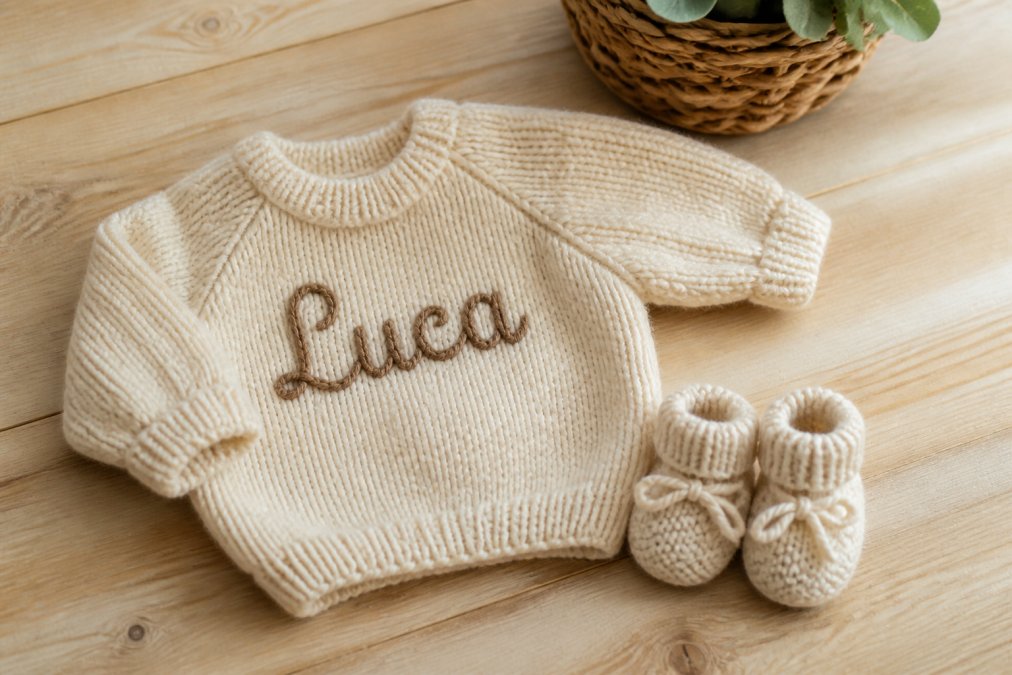
Yarn selection is where this option separates itself. Custom Knits for Baby works with soft yarns chosen for comfort against infant skin, and the collection extends to designs for babies and adults.
Best for: Gift-givers who want a personalized keepsake rather than another onesie, and parents who want a garment that survives as a memory.
The honest limitation: custom production takes longer than buying off a shelf. If you're three weeks out from a shower, order now and confirm the timeline rather than assuming.
2. Coyuchi Cozy Cotton Organic Baby Blanket: The Non-Wool Pick
Coyuchi's Cozy Cotton blanket is the answer for anyone who wants nothing to do with wool. It's 100% GOTS-certified organic cotton, grown and processed without synthetic pesticides or toxic dyes, and machine washable, which matters more than any other feature in a newborn blanket. It's also the most versatile gift here: swaddle layer, stroller cover, and tummy-time mat, so it stays in rotation long after the newborn stage.
The trade-off: it costs more than a standard cotton blanket, and it isn't a garment, so it won't satisfy someone specifically shopping for a knit sweater.
3. Malabrigo Rios Yarn: Superwash Merino for Heirloom Knits
If you knit, or you're commissioning someone who does, Malabrigo Rios is the yarn most experienced knitters reach for when the brief is "heirloom quality but a parent has to be able to wash it." It's 100% superwash merino wool, soft enough for infant skin, and colorfast across many hand-dyed shades. The superwash treatment is the point: the finished sweater can go in the machine, the single biggest predictor of whether a hand-knit gets worn. The catch is that Rios is a yarn, not a garment, so you need knitting skills or a commissioned maker.
4. Drops Baby Merino Yarn: Budget-Friendly and Oeko-Tex Certified
Drops Baby Merino is the value pick for knitters who won't compromise on fiber. It's 100% merino wool, fine-spun for delicate skin, superwash treated, and Oeko-Tex certified, screened for harmful substances. It wins on stitch definition: fine-spun merino shows intricate patterns clearly, so cables and lace read the way the pattern intended. It falls short on availability, since it isn't stocked in every local craft store and often has to be ordered.
5. Lion Brand Coboo Yarn: Bamboo-Cotton for Warm Climates
Coboo is a 50/50 cotton and bamboo blend, the right call when wool is simply too warm. Bamboo gives it soft drape and a slight sheen; cotton keeps it breathable and machine washable. For sensitive skin, the blend is hypoallergenic and smooth, with none of the texture that can irritate. The limitation is warmth: it's a layering yarn, better suited to a lightweight cardigan or summer tank than a heavy winter knit.
Frequently Asked Questions
What can I knit for a newborn baby instead of a full sweater?
Small projects work well for newborns because they finish quickly and get worn often. Consider booties, a bonnet, a swaddle sack, or a simple cardigan with snap closures. A lightweight tank top or romper in a cotton blend suits warmer months. Blankets remain the most versatile gift since they last through the toddler years. If you want a keepsake, a personalized baby sweater with the child's name adds sentimental value without much extra effort.
How do I choose safe yarn for newborn clothes?
Look for soft, fine-spun fibers that won't scratch delicate skin. Merino wool, cotton blends, and bamboo-cotton yarns are common choices. Check for Oeko-Tex certification, which confirms the yarn has been tested for harmful substances. Superwash treatment makes garments machine washable, which matters for busy parents. Avoid rough or hairy yarns that shed, since loose fibers can reach a baby's mouth. Always wash the finished item with a gentle, fragrance-free detergent before first use.
Are personalized knitted sweaters better than generic baby clothes?
They serve different purposes. Generic baby clothes are affordable and easy to replace as a baby grows. Personalized knitted sweaters create a keepsake that families often save for years. A name stitched into the garment also helps prevent mix-ups at daycare or family gatherings. If you want a gift that feels meaningful rather than disposable, a custom-knit piece delivers that. For everyday spit-up and diaper changes, keep a few plain cotton basics on hand too.
What safety considerations should I keep in mind for newborn knitwear?
Buttons and snaps must be sewn on securely, because loose closures are a choking hazard. Avoid long ties or ribbons near the neck. Check seams and edges for loose yarn tails that small fingers can pull. Choose breathable fibers so a baby doesn't overheat, and skip heavy blankets in the crib. The safest sleep setup uses a fitted sheet with no loose bedding. For waking hours, a well-fitted cardigan or romper with secure closures works well.
Choosing a knitty baby alternative for newborns comes down to matching fiber, closure, and care to how your family actually lives, not to how a product photo looks. Custom Knits for Baby builds that decision into every order: hand-knitted construction, personalization with your child's name, soft yarns chosen for infant skin, and designs for both babies and adults so the piece grows into a family keepsake. Order yours today and give a newborn something that lasts longer than the newborn stage.