 comparison
Beerose Boutique vs Custom Knits: What Fits Better?
Table of Contents
- Why This Comparison Matters for Personalized Baby Sweaters
- Side-by-Side: Beerose Boutique vs Custom Knits
- Quality and Durability: What Survives Baby Wear
- Choosing the Best Yarn for Baby Knitwear
- How to Care for Hand-Knit Baby Sweaters
- The Real Cost of a Custom Keepsake
- Final Verdict: Which One Should You Choose?
- Frequently Asked Questions
Last Updated: September 9, 2026
Why This Comparison Matters for Personalized Baby Sweaters
The choice between a boutique brand and a custom knitter comes down to one question: do you want a product, or do you want a keepsake? For new parents and gift-givers shopping for personalized baby sweaters, that distinction changes everything about what you buy, how much you pay, and what you keep after the baby outgrows it. At Custom Knits for Baby, we understand the trade-offs better than most.
Boutique brands often use machine-knit production to keep prices down and inventory moving. Custom knitters work differently, creating each garment as a one-of-a-kind piece. The beerose boutique vs custom knits debate isn't about which is "better" in the abstract. It's about which approach delivers what you actually value: speed and convenience, or a handmade-to-order piece with your child's name stitched into the fabric itself.
Below, we'll break down the real differences in durability, yarn quality, cost, and lead time so you can decide with confidence. We'll also cover how to care for hand-knit baby sweaters once you have one, because that's where most parents get stuck.
Side-by-Side: Beerose Boutique vs Custom Knits
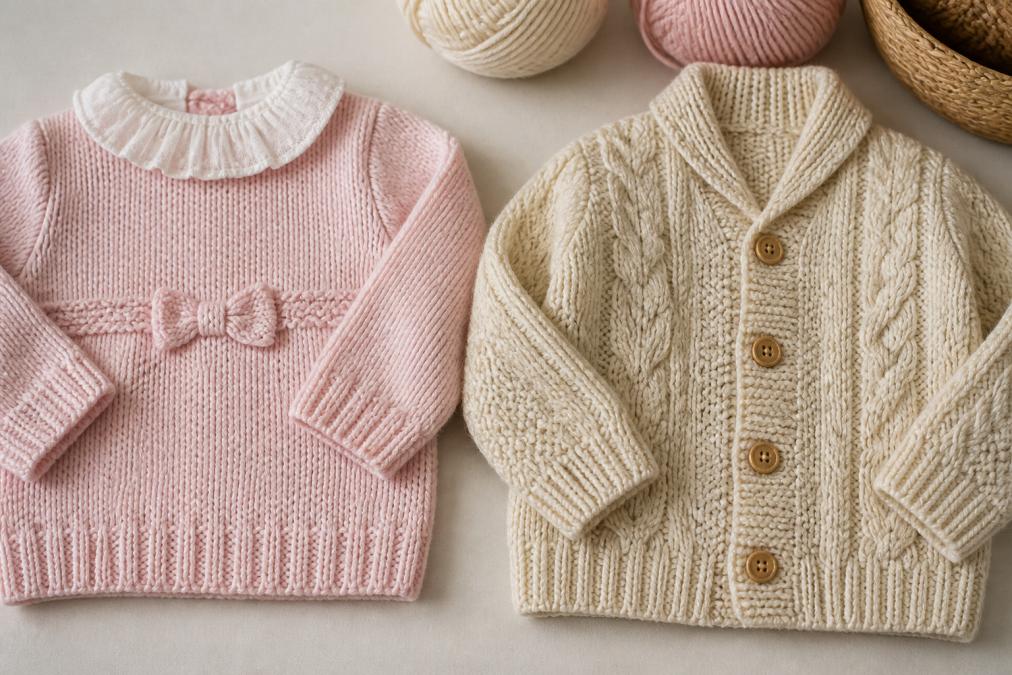
The core difference between beerose boutique vs custom knits lies in the production model. Boutique operations typically rely on machine-knit or cut-and-sew garment construction, which allows them to produce larger batches quickly. Custom knitters use hand-knit or knit-to-shape methods, producing one garment at a time.
| Factor | Boutique Brands | Custom Knitters |
|---|---|---|
| Production Method | Machine-knit, cut-and-sew | Hand-knit, knit-to-shape |
| Personalization | Surface printing, limited | Name stitched in design |
| Lead Time | Shorter, ready to ship | Longer, handmade-to-order |
| Design Flexibility | Fixed catalog | Bespoke options |
| Inventory Risk | Held by retailer | None, made on demand |
| Keepsake Value | Moderate | High |
A boutique sweater is a lovely garment. A custom-knit piece, however, becomes a keepsake tied to a specific child and a specific moment. The personalized design isn't printed on the surface; it's part of the textile design itself, worked into the stitch pattern.
Quality and Durability: What Survives Baby Wear
Babies are hard on clothing. Between spit-up, drool, and countless washes, a sweater needs to hold up to real wear, not just look good in a photo. Hand-knit garments typically outperform machine-knit options in durability because the stitch pattern is denser and the garment construction allows for more give without losing shape (peer-reviewed research).
A common mistake is assuming all baby knitwear is equally durable. Fiber content matters more than most guides admit. Custom knitters can select yarns specifically for softness and washability, while mass-produced pieces often prioritize cost over material longevity testing.
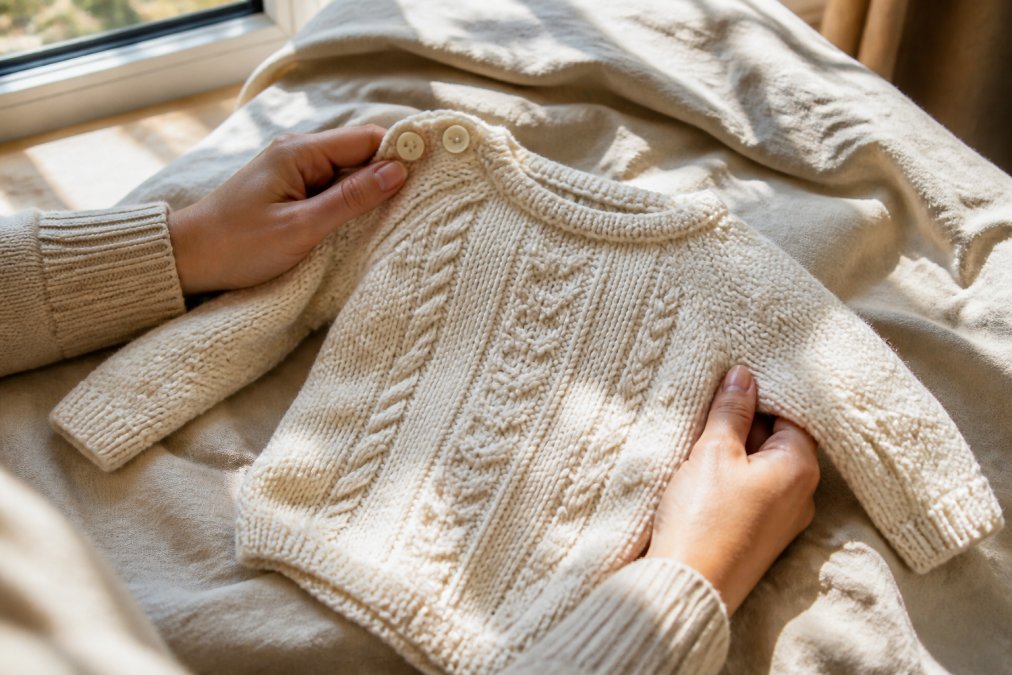
What most guides miss is that a well-made hand-knit sweater can actually survive multiple children. The garment construction allows for careful mending, something that's nearly impossible with cut-and-sew pieces where the seams fail first. For families planning more than one child, that durability changes the value calculation significantly.
Choosing the Best Yarn for Baby Knitwear
The best yarn for baby knitwear balances three priorities: softness against sensitive skin, durability for repeated washing, and warmth without bulk. Many parents worry about rashes and irritation, and rightly so. The fiber content of the yarn determines how the finished sweater feels against a newborn's skin.
For babies with sensitive skin, look for yarns that are labeled hypoallergenic or specifically designed for infants. Natural fibers like merino wool and cotton blends are popular choices because they breathe well and resist odor. Synthetic blends often cost less but can trap heat and irritate delicate skin.
How Knit Structure Affects Longevity
The fiber content is only half the story. The knit structure itself determines how a garment survives repeated wash cycles. Stockinette stitch, the smooth, V-shaped pattern most machine-knit sweaters use, is prone to curling at the edges and shows wear faster than ribbed or textured patterns. Ribbed stitches (k2, p2 patterns) compress more densely, hold their shape better, and resist pilling because the yarn loops are shorter and tighter.
A common pattern in wash-testing is that hand-knit garments using a ribbed or seed-stitch pattern can outperform stockinette machine-knit pieces. The denser stitch structure traps less water, dries faster, and experiences less fiber agitation in the wash. Surface-printed boutique sweaters, by contrast, can begin showing hairline cracks in the print after repeated machine washes, regardless of fiber quality.
Fiber-Specific Wash Performance
Superwash merino wool is a forgiving fiber for baby garments. The superwash treatment removes the scales from the wool fibers, preventing felting and allowing gentle machine washing on cold. Cotton blends, while soft, absorb water and take longer to dry, which can lead to mildew if not laid flat promptly. Acrylic blends resist shrinking but can pill quickly because the synthetic fibers break and ball up under friction.
For a keepsake piece meant to survive multiple children, a superwash merino or a merino-cotton blend in a DK or worsted weight can offer good performance. Finer yarns (fingering or lace weight) create delicate fabrics that may show wear faster and are better reserved for special-occasion pieces that will see limited use.
What to Ask Before You Order
When you order from Custom Knits for Baby, you can request the exact materials list before committing. Every piece is crafted with the softest yarns, and we're transparent about what goes into each sweater. That's a level of design flexibility you rarely get from a boutique that sources from a manufacturing catalog.
Ask these three questions before committing to any custom knitter:
- What is the exact fiber percentage? A "wool blend" can mean anything from 80% wool to 20% wool. Demand specifics.
- Is the yarn superwash-treated? If not, the garment requires hand washing only, which changes the care burden significantly.
- What stitch pattern will be used for the body? Ribbed or textured patterns will outlast stockinette in everyday wear.
How to Care for Hand-Knit Baby Sweaters
Learning how to care for hand-knit baby sweaters is essential if you want the piece to survive more than one season. The good news is that proper care is simple once you know the basics. The bad news is that most parents default to machine washing, which is the fastest way to ruin a hand-knit garment.
Follow these steps to keep your sweater in heirloom condition:
- Hand wash in cool water with a gentle, wool-safe detergent (woolmark.com)
- Press water out gently, never wring or twist the fabric
- Lay flat on a towel to dry, reshaping to its original dimensions
- Store folded, never hung, to prevent stretching
- Wash infrequently, only when actually soiled
Many parents find that a hand-knit sweater needs washing far less often than expected. Because natural fibers resist odor, airing the sweater between wears is often enough. When you do wash it, the extra few minutes of care pays off in years of use.
The Real Cost of a Custom Keepsake
Let's address the elephant in the room: a custom-knit sweater costs more than a boutique alternative. The price gap reflects real differences in production time, materials, and labor. A hand-knit garment takes hours of skilled work, while a machine-knit piece takes minutes. For small-batch production and handmade-to-order pieces, there's no way around that math.
But for solopreneurs and small-scale creators deciding between DIY knitting and outsourcing to a boutique or custom knitter, the decision requires a sharper financial lens than a simple price tag comparison. Most guides stop at "custom costs more," leaving creators without a framework to evaluate their own time and capital.
The Solopreneur ROI Framework
When you knit a sweater yourself, your costs are materials plus your time. At a conservative $15 per hour for your labor and $25 in yarn for a baby-sized garment, a 10-hour project carries a true cost of $175 before you sell it (sba.gov). A boutique alternative might retail at $60, and a custom knitter might charge $120. The DIY route only makes financial sense if you value the creative process itself or if your hourly rate is below what you could earn elsewhere.
For a creator selling to customers, the math shifts. A custom knitter outsourcing production at $120 per piece and retailing at $240 operates on a 50% gross margin. A boutique selling machine-knit pieces at $60 with a $25 wholesale cost operates on a 58% margin but faces inventory risk. If 20% of boutique stock goes unsold and gets discounted, the effective margin drops below the custom model's made-to-order zero-inventory advantage.
Cost Per Wear: The Keepsake Math
For families, the more revealing number can be cost per wear. A custom-knit sweater that survives multiple children can offer a comparable or lower cost per wear than a cheaper boutique piece over time, especially if it becomes a keepsake or is passed down.
Hidden Costs Most Guides Ignore
Boutique purchases can carry hidden costs that rarely appear in comparison articles: return shipping fees if the size is wrong, and replacement costs when surface-printed names crack after repeated washes. Custom pieces carry their own considerations: longer lead times that may miss a fast-approaching baby shower, and the need to order early to guarantee delivery.
For small-scale creators, the decision is not just about margin but about cash flow. Custom knit-to-order requires no upfront inventory investment, making it a lower-risk entry point for a new baby apparel business than stocking boutique-style inventory. The trade-off is slower revenue velocity, you collect payment only after the garment is completed, not at the point of sale from existing stock.
Final Verdict: Which One Should You Choose?
If you need a sweater quickly and want to keep costs down, a boutique brand will serve you fine. If you're shopping for a personalized keepsake that will be worn, washed, and treasured for years, custom knitting is the better choice.
The beerose boutique vs custom knits decision ultimately comes down to what you're buying. A product you'll use for a season, or a keepsake you'll pass down. For most parents and gift-givers seeking personalized baby sweaters, the handmade-to-order approach delivers something a boutique simply can't: a one-of-a-kind piece with your child's name worked into the design itself.
Custom Knits for Baby offers hand-knitted sweaters personalized with your child's name, crafted from the softest yarns for babies and adults alike. Every piece is designed to keep your little one warm while creating a timeless keepsake you'll treasure long after they've outgrown it.
Frequently Asked Questions
What is the main difference between boutique knitwear and custom-made options?
Boutique knitwear is often produced in small batches or pre-made, meaning you buy a design the shop created. Custom-made options, like those from Custom Knits for Baby, are knit specifically for your child, usually with a name or design you choose. This affects everything from sizing to personalization, making custom pieces a true keepsake rather than a ready-made purchase.
Are personalized baby sweaters worth the investment for infants?
For many families, yes. A hand-knit, personalized baby sweater serves as a sentimental keepsake long after the baby outgrows it. The value comes from the quality of the yarn and the personal touch. If you are looking for a piece to photograph and save, the investment makes sense. If you need a basic layer for warmth, a simpler option might be more practical.
How do I choose the best yarn for baby knitwear?
Look for soft, washable fibers that won't irritate sensitive skin. Superwash merino wool and premium cotton blends are popular choices because they are gentle and durable. Always check the fiber content and care instructions. For a true keepsake, you want a yarn that holds its shape and color after multiple washes, which is a hallmark of the best yarn for baby knitwear.
Can I order custom-knit sweaters for special occasions?
Yes, custom knitwear is a popular choice for christenings, first birthdays, and holiday photos. When ordering for a specific event, plan ahead. Hand-knitting takes time, so check production and shipping schedules before you commit. This is where the lead time of your chosen maker becomes a deciding factor between a boutique and a custom service.
Choosing between boutique and custom comes down to what you value more: convenience or permanence. A custom-knit sweater takes time to create, but it rewards you with durability, personalization, and a keepsake that machine production can't replicate. Order yours today and give your little one something made just for them.